Step 2 – Protecting Quality from Origin to Destination: How World-Class Logistics and Laboratory Partnerships Preserve U.S. Soy Value
By Thomas D’Alfonso, Ph.D., Worldwide Animal Nutrition Focus Area Director, U.S. Soybean Export Council
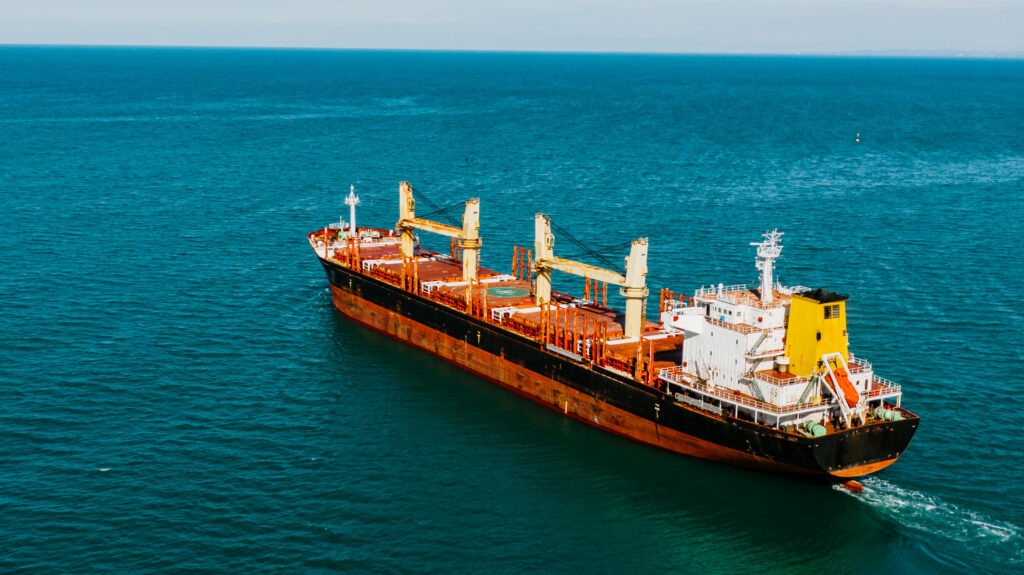
Quality soybeans leaving the farm gate mean nothing if that quality degrades before reaching your feed mill. The U.S. export infrastructure, a network of roads, rivers, railways, and world-class laboratory partnerships, is designed to protect the nutrient value you’re paying for as it is transported overseas.
The Role of Independent Quality Verification
“We’ve really taken a boots-on-the-ground approach to making sure that the end customer is getting the quality product they’re looking for,” explains Reese Allemore, Operations Manager at Russell Marine Group (RMG). With more than 60 years of experience in the U.S. soy export system, RMG provides independent surveying and laboratory services that keep all supply chain players accountable.
“We’re doing everything from tracking barge locations up and down the river, making sure that those barges or [trains] arrive in a timely fashion,” Allemore describes. These logistics details might seem minor, but delays and mishandling can compromise quality.
The shippers also depend on this verification system. “What we’ve done is team up with a lot of the larger shippers including ADM, Bunge, and Cargill, for example,” Allemore notes. “They also want to make sure that you’re receiving a good product. Because at the end of the day, if you’re not receiving a good product, then you’re going to go elsewhere.”
Beyond Protein: What Advanced Testing Reveals
“About 12 to 13 years ago, Eurofins came to the U.S. and partnered up with us,” Allemore notes. “We had a really strong hold on all of our proximates, but what Eurofins really brings is the sophisticated testing including testing for pesticides, metals, and other things that are really above and beyond.”
But sophisticated testing isn’t just about safety – it’s about understanding true nutritional value. Crude protein percentage, for example, tells only part of the soybean meal story. Soybean meal is the most important source of amino acids in poultry diets; however, what birds actually utilize depends on digestible amino acids and available energy – nutrients that vary significantly by soybean origin and processing quality.1
“It’s not just the protein that’s selling, it’s the more performance-based analysis,” Allemore explains.
Built on Family Values
Like many U.S. farms, RMG is a family business built across generations. “It was a father’s business that passed to his twin sons that still work in the office today,” Allemore shares. “They’ve built relationships that are a key part of our culture and the way we do business.”
The company is committed to quality over expedience, mirroring the values of U.S. soybean farmers. “Financially, it is not the best mode to take our time and be so thorough in our processes,” Allemore admits. “But we understand that, just like U.S. Soy, name is reputation. We want to make sure that whoever around the world is receiving our services, it’s the same standard across the board.”
Learn more about RMG’s role in creating and maintaining consistency across the entire U.S. Soy supply chain here.
What’s Nourishing Your Business?
Partially funded by the Soy Checkoff
[1] Ibáñez, M.A. et al. (2020) Chemical composition, protein quality and nutritive value of commercial soybean meals produced from beans from different countries: A meta-analytical study. Animal Feed Science and Technology, 267. https://doi.org/10.1016/j.anifeedsci.2020.114531.