
Precision Nutrition in Practice: Workshops Demonstrate the Value of U.S. Soybean Meal
As the livestock sector across Southeast Asia rapidly modernizes, feed integrators are embracing solutions that align performance, sustainability and profitability.
Precision nutrition – an approach that fine-tunes feed formulations based on real-time data and species-specific needs – is emerging as a powerful tool to achieve these goals. To support this shift, USSEC engages directly with industry leaders through its Poultry Nutrition Integrated Program (PNIP), funded by the USDA Regional Agricultural Promotion Program. This effort showcases how U.S. soybean meal supports smarter, more efficient feed strategies.
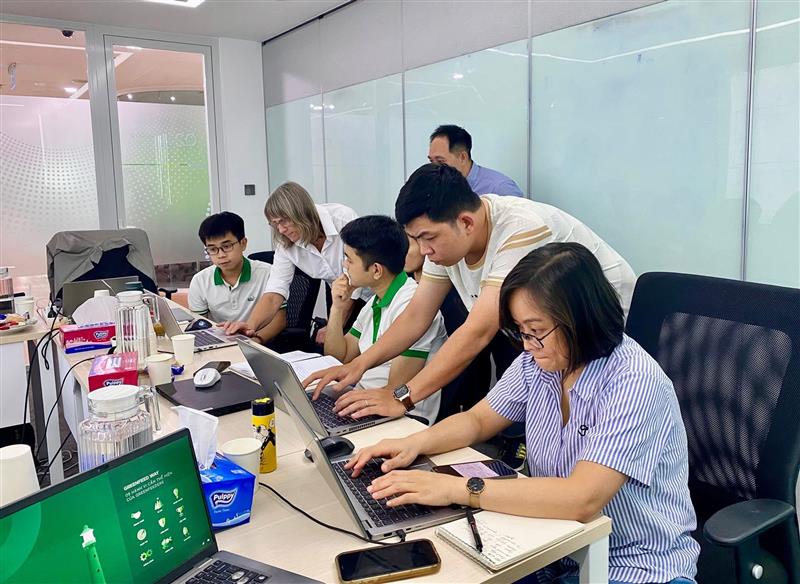
USSEC recently hosted a series of PNIP workshops in collaboration with leading integrators across Indonesia, the Philippines, Thailand and Vietnam. Nutritionists, procurement teams and feed mill technicians engaged in hands-on simulations and data-driven discussions. They evaluated the performance of U.S. soybean meal in real-world broiler production scenarios.
Company participation included Indochem and Sinta Prima from Indonesia; San Miguel Foods Inc. from the Philippines; Betagro, Charoen Pokphand Foods Public Company Limited, Sungroup Technology and Thai Union from Thailand; and Cheil Jedang, De Heus and Greenfield Vietnam Corp from Vietnam. This support reflects the program’s growing regional reach, and its role in fostering deeper industry alignment on the value of U.S. Soy.
“The Poultry Nutrition Integrated Programallows us to engage directly with feed professionals and demonstrate how U.S. Soy supports both performance and precision nutrition,” said Basilisa Reas, Ph.D., animal nutrition lead for USSEC in East Asia. “By translating data into practical insights, we’re helping integrators across the region strengthen their formulations and build confidence in the consistent quality of U.S. soybean meal.”
Enhancing Formulation Decisions
A hallmark of the PNIP series is its hands-on, data-driven format. USSEC partnered with leading feed integrators to deliver technical presentations and simulation exercises. Participants worked with real formulation data to compare soybean meal from different origins.
Results consistently demonstrated that U.S. soybean meal delivers higher energy and amino acid concentrations, leading to improved feed efficiency and animal performance. These insights reinforced the nutritional value of U.S. Soy and helped attendees gain confidence in applying precision nutrition tools to their feed strategies.
“This workshop went beyond delivering technical information,” said Bui Tran Hoang Anh of Greenfeed’s feed formulation department. “It transformed how we approach feed formulation. Applying real growth prediction data gave us a clear, practical view of precision nutrition in action. It’s changing the way we think about feed efficiency and reinforcing U.S. Soy as a strategic ingredient rather than just a commodity.”
Other participants agreed.
“The training reminded us to focus on the basics – soybean meal quality can differ by origin and supplier,” said Gerry Oude Elferink, nutrition and support director at De Heus Animal Nutrition. “It’s important to weigh factors like carbon footprint alongside nutrition and cost.”

Beyond Nutrition: The Sustainability Advantage
Feed is the most significant cost – and environmental input – in animal production. Optimizing feed composition through precision nutrition enhances profitability, while reducing waste and environmental impact. During the workshops, participants explored how growth modeling supports both cost efficiency and sustainability by aligning nutrient supply with animal needs.
USSEC also presented the Sustainable U.S. Soy Assurance Protocol (SSAP) and Sustainable U.S. Soy initiatives, highlighting the traceability, environmental stewardship and conservation practices employed by U.S. soybean farmers. From reduced greenhouse gas emissions to conservation tillage, U.S. Soy’s supply chain reflects a commitment to continuous improvement, making it a responsible choice for feed manufacturers prioritizing environmental, social and governance goals.
Building Long-Term Value
The PNIP workshops are part of USSEC’s broader strategy to provide decision-makers with tools for better feed design.
“By combining science, technology and real-world data, we’re helping our partners make more informed decisions that support both animal performance and sustainable growth,” said Timothy Loh, USSEC Regional Director for East Asia. “U.S. Soy continues to deliver value through consistent quality, technical support and a long-standing commitment to partnership.”
USSEC continues to demonstrate how U.S. Soy delivers value, supporting both immediate production goals and long-term resilience in Southeast Asia’s feed and poultry industries.
Partially funded by USDA FAS
#####