New Study Offers Insight into U.S. Soy Food Bean Supply
The U.S. Soybean Export Council (USSEC), with support from the Soy Checkoff, conducted a study that expands on USDA data to provide a clearer picture of non-GMO soybean acreage across the United States.
The 2026 study provides data on current U.S. production, supply and demand, export markets, end uses and purchasing practices. The report is designed to help importers, food manufacturers and other buyers sourcing U.S.-grown specialty soybeans better understand production, demand and availability.
U.S. Soybean Production Provides a Large Supply Base
The U.S. soybean crop provides a substantial production base for specialty soy. In 2026, U.S. farmers planted an estimated 85.4 million acres of soybeans, up 5% from 2025, while non-GMO soybean acreage also increased. Importantly, non-GMO soybeans used for soy food production are grown across a vast geographic area, from North Dakota in the north and west to Arkansas in the South and Virginia in the East, allowing for a diverse selection of soybean varieties while mitigating weather-related concerns
Grower interest also remains strong. Sixty-five percent of purchasers surveyed reported increased grower interest in non-GMO soy food beans compared with 2025, with premiums and diversification noted as the top reasons for expanded interest.
U.S. Soy Food Beans Supply Markets Around the World
Approximately 80% of U.S.-produced non-GMO soy food beans are exported, demonstrating the important role of U.S. soy in global food markets.
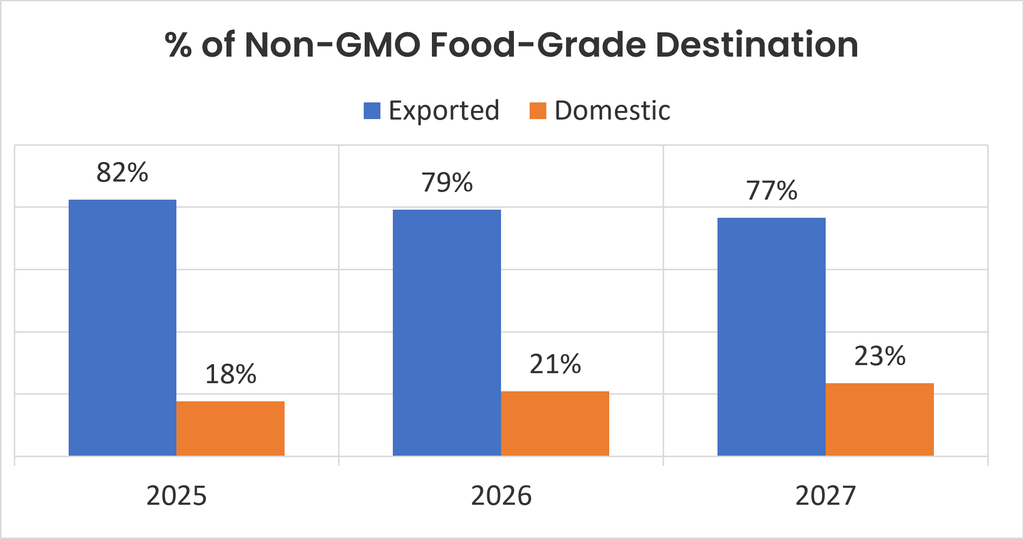
Japan imports the largest share. Other key export markets include South Korea, Taiwan, Thailand, the European Union, Malaysia and Singapore, along with emerging markets in Southeast Asia.
From Tofu and Soy Milk to Natto and Miso
U.S. specialty soybeans are used to produce a wide range of traditional and modern soy foods. In 2026, the leading end uses were tofu (34%), soy milk (19%) and natto (14%), followed by miso, soy sauce, sprouts, tempe and other applications.
Forward Contracting Helps Buyers Plan for Supply
For companies that depend on specific soybean varieties and quality characteristics, planning ahead is important. In 2026, an average of 91% of non-GMO soy food bean purchases were contracted, compared with 87% in 2025.
Forward contracting can give buyers greater supply certainty while helping growers plan production around market requirements. Early conversations among buyers, suppliers and growers can help align acreage and production with anticipated demand.
Data Buyers Can Use
“For international buyers, detailed information about U.S. soy food bean production can be difficult to find,” explains Will McNair, director, Soy Foods, Oil and Global Team Development, USSEC. “This study provides insight into acreage, production trends, purchasing practices, export destinations and end use that can help importers and food companies make more informed sourcing decisions.”
Click Here to Download the Full Report
Visit USSEC’s updated Specialty Soy Database, the most comprehensive database of U.S. specialty soybeans.
Partially funded by the Soy Checkoff