
Diversification Strategy Paying Off as USSEC Convenes Global Soy Conference
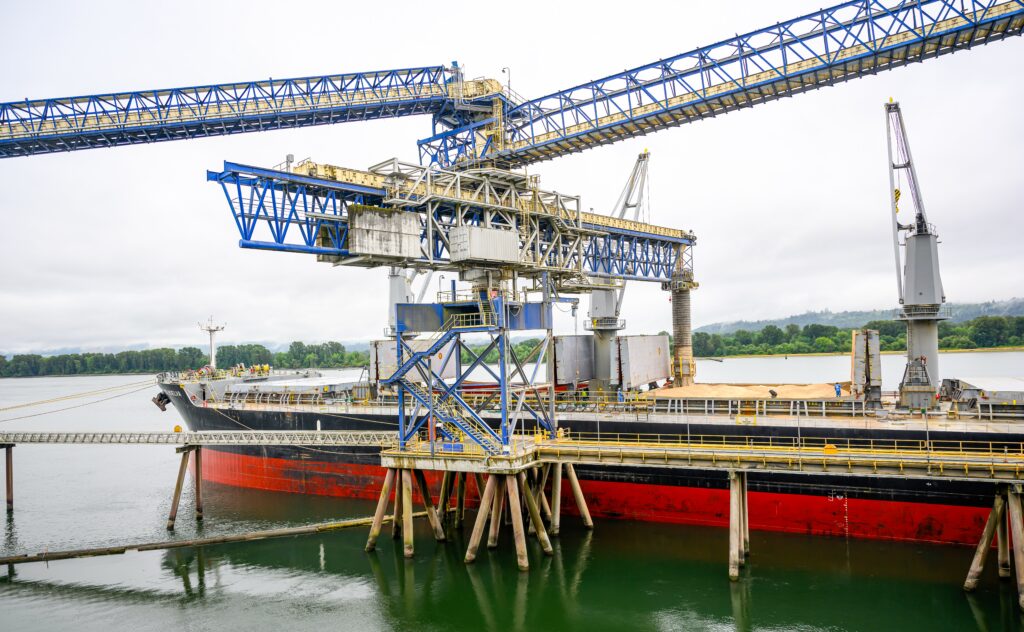
- Annual Soy Connext opens in Chicago today with record attendance
- Rebounding China trade and surging demand from ROW markets point to improved outlook ahead for U.S. Soy exports
CHICAGO (August 5, 2026) —The U.S. Soybean Export Council (USSEC) has increased its emphasis on global market diversification as the competitive focus for U.S. Soy exports. Today, as USSEC’s flagship Soy Connext conference opens with record attendance of over 800, the data shows that strategy is delivering results.
Diversification and Normalizing China Trade Relations Expected to Drive U.S. Soybean Exports
U.S. Soy exports (whole soybeans, soybean meal and soy oil) are projected to grow in the marketing year (MY) 2026/27 by 5%, driven by increasing demand across more markets and a projected return to normal trade relations with China, the world’s largest soybean buyer and, historically, U.S. Soy’s top export customer.
These projected gains follow a year-over-year (YOY) decline in total U.S. Soy global exports during MY 2025/26, driven by U.S.-China trade tensions. As reported in the July 23, 2026, USDA Weekly Exports report total U.S. Soy exports year-to-date are down 11% with shipments to China down 45% and to the rest of the world (ROW) up 9%.
“We are excited to see the focus on diversification working with sales to the ROW up strongly market-year-to-date on top of last year’s record, and also to see sales to China resuming thanks to the agreements made by President Trump and President Xi,” said Jim Sutter, USSEC CEO.
Approximately 400 international buyers from 67 countries are attending Soy Connext in Chicago this week. This includes 30 Chinese customers. This record attendance is a strong signal of U.S. Soy’s value to markets all over the world.
“We’re seeing China’s purchases return closer to normal, and other destinations continuing to grow. This is a good place to be,” Sutter said. “That’s not a coincidence — it’s what happens when you keep showing up. Even when there were trade issues in various places or in the worst case when trade stopped, USSEC never stopped engaging with our international partners. That persistence, combined with the reliability, quality and value U.S. Soy delivers, kept the door open and is what’s driving this growth today.”
Growth in the Year Ahead
WASDE projects China’s total global MY 2026/27 soybean imports at 115 million metric tons (MMT) — the strongest demand signal from China ever, setting the stage for a new record. In the meantime, recent data shows China met its 12 MMT commitment of U.S. soybean purchases for MY 2025/26 made as part of the Busan trade agreement and is now shifting into a 25 MMT annual commitment to purchase U.S. Soy, putting purchases back in line with MY 2024/25 levels of 24.2 MMT.
Meanwhile, ROW demand for U.S. Soy is on an upswing.
“Diversification isn’t a talking point for us — it’s the strategy, and it’s paying off,” Sutter said.
According to USDA-FAS sales data through the week ending July 23, growth is showing up across the map in MY 2025/26:
- While Mexico is on pace to remain as U.S. Soy’s second largest whole soybean market (after China), Egypt is on pace to move into a top three slot, a rapid expansion from previous years.
- Whole bean exports remain strong in Japan, Indonesia, and South Asia.
- The EU-27 emerged as a strong soybean meal importer as we moved into the last quarter of the marketing year, up almost 500,000 MT from last year
- Key markets in the Americas, the Philippines, and Vietnam are posting strong soybean meal demand.
“U.S. Soy competes on premium value, not on price and ultimately that’s what is driving our growth,” Sutter said. “Our farmers, exporters and industry partners deliver consistent quality, reliable supply and sustainable production that buyers can count on year after year.”
Looking Ahead: U.S. Soy Poised for Growth
U.S. Soy is well positioned to meet growing global demand for soy.
The global stocks-to-use ratio for soybeans is projected to tighten to nearly 28% in MY 2026/27, down from 28.6% in MY 2025/26, even as global soybean production climbs from 429.2 MMT to 441.2 MMT over the same period, according to recent monthly data from Oil World.
“Global demand for soy is growing faster than the world can produce it, and that gap is exactly why buyers are looking for partners they can count on,” Sutter said. “Our work through Soy Connext and our trade teams is what turns that global demand into lasting relationships with U.S. Soy.”
Even with domestic crush on the rise, increased U.S. Soy crop production translates into whole soybeans available for export. According to the July USDA market outlook, the U.S. soybean crop is forecast at a record level of 4.5 billion bushels. U.S. farmers planted 85.4 million acres of soybeans this growing season, up 5% from last year.
At the same time, U.S. soybean meal exports are projected to rise, driven by greater global demand and more U.S. soybean meal availability resulting from increased domestic crush. In MY 2024/25, soybean meal exports were up 13.9% YOY according to USSEC’s end-of-year market report, surpassing the previous market year record at 16.3 MMT of meal exported.
“Increased global demand for oil is driving more crush capacity worldwide, and those facilities need more soybeans to crush, not less. In the meantime, regions without their own domestic crush capacity are clamoring for more soybean meal to meet their livestock and aquaculture feed demands — a market U.S. Soy is ready to serve,” Sutter said.
“What we’re seeing isn’t a shrinking pie, it’s a bigger one. Historically between 50% and 60% of the U.S. Soy crop is exported and our industry is geared up to keep doing that. USDA projects 54% in both MY 2025/26 and MY 2026/27, and I think the signs point to it being even higher. All this combines to a very positive outlook for U.S. Soy,” Sutter added.
Soy Connext 2026 Program Highlights
With an agenda built around market diversification, this year’s Soy Connext week of activities includes expert panels on sustainability, global market dynamics and supply chain resilience. Popular events include the Trade Team Invitational, a series of one-on-one meetings connecting international buyers with exporters; and a full slate of pre- and post-event farm and industry tours, giving international delegations a firsthand look at U.S. Soy’s quality, reliability and stewardship.
###