
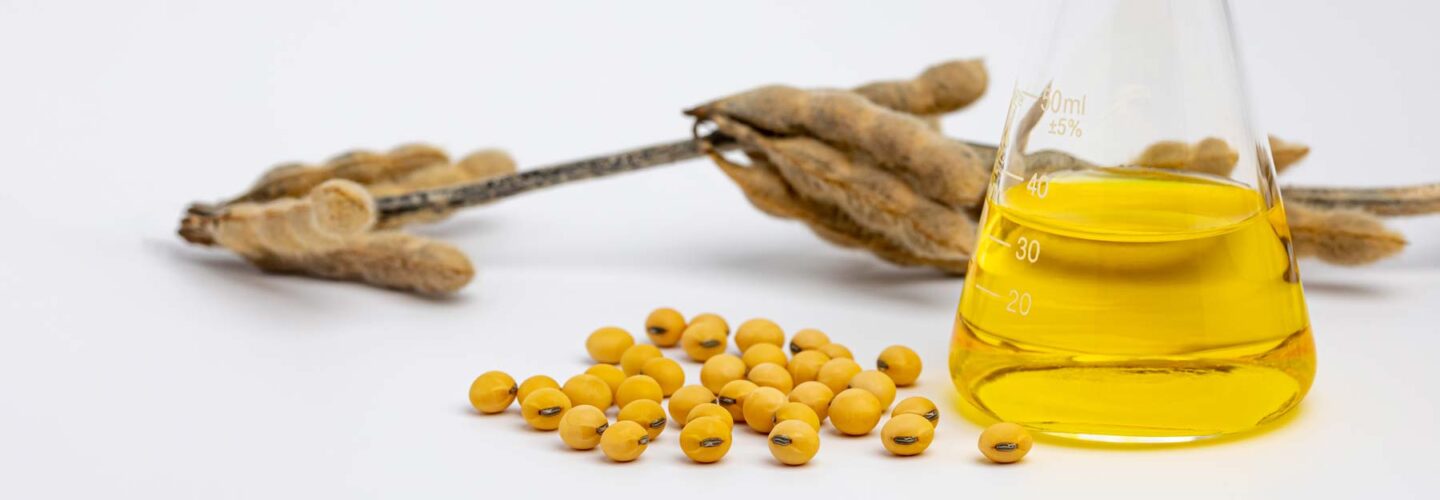
Soybean Oil
Healthy. Functional. Sustainable.
From food to feed, soybean oil adds value to a vast array of applications. With its neutral flavor, potential heart-health benefits, and favorable fatty acid profile, soybean oil is an ideal choice for a wide variety of cooking and baking formulations. While a more secondary player in animal nutrition, its benefits are no less powerful, impacting feed efficiency and growth with its high fat content.
In fact, soybean oil is the most widely consumed oil in the United States and globally1. And soybean oil from the U.S. delivers excellent value in every drop.

Benefits for Refiners and Crushers Alike
Whether you are refining or crushing, the benefits of U.S. Soy are clear:

Spotlighting High Oleic Soybean Oil’s Many Benefits
Consumers want easier ways to eat healthier. You want an easier way to answer their demand, with an ingredient that will not change your formulations’ taste, profile or performance. High oleic soybean oil fulfills those requirements and more:
- Improved fat profile
- Greater shelf-life stability
- Longer fry life
- Neutral flavor
- Clean label
- Enhanced functionality
What gives high oleic soybean oil its power?
High oleic soybean oil has the highest oxidative stability index (OSI) of any vegetable oil6, leading to longer shelf life for packaged foods and a longer fry life.
In addition, high oleic soybeans provide a high stability oil. The resulting soybean meal is an added value opportunity for animal feeding, and for the dairy industry in particular.
Fact Sheets
Download resources on how high oleic soybean oil can benefit your applications, plus easier sourcing for high oleic soybean oil:
Easier Sourcing for High Oleic Soy

Soybean Oil Benefits for Human Health
Soybean oil’s health benefits are many and powerful, which in turn gives your products more functionality and appeal for consumers.
FDA Qualified Health Claim
Did you know? The U.S. Food and Drug Administration (FDA) has recognized both soybean oil and high oleic soybean oil for their cardiovascular health benefits with a qualified health claim that they may reduce the risk of coronary heart disease when replacing saturated fat.3
But soy oil does not stop there. It is a source of:5
- Vitamin E, which has antioxidant properties
- Omega-3 fatty acids, which play a key role in promoting health and preventing chronic disease

The Star of Vegetable Oils
Soybean oil is one of the most powerful and most consumed vegetable oils. High oleic soy oil takes it a step further:4
- More than 70% oleic acid, which the FDA recognizes for health benefits that it may reduce the risk of coronary heart disease when replacing saturated fat
- No trans-fat
- Fatty acid composition similar to olive oil, the oil consumers view as most healthy

Advantages of U.S. Soybeans
The origin of your soybeans matters. Soybean oil made from U.S. soybeans (whether crushed in market or imported from the U.S.) offers a higher refining rate and lower refining costs compared to oil made from Brazilian and Argentine soybeans.
In addition, U.S. soybeans exhibit lower rates of damage and heat-related issues when compared to other origins. Elevated heat damage levels are linked to higher free fatty acid content in soybean oil, which must be removed and drives up costs for refiners.
Learn about the value and benefits of other U.S. Soy products, including whole soybeans, soybean meal and specialty soy products. And visit the Resource Library for more information on U.S. soybean oil.
1. https://ussoy.org/wp-content/uploads/2024/06/Soy-Foods-in-Human-Health.pdf
2. The “Processing Characteristics of Soybeans from Different Countries” study found soybean oil produced from U.S. soybeans scored systematically higher than soybean oil from other origins.
4. Huth PJ, Fulgoni VL, 3rd, Larson BT. A systematic review of high-oleic vegetable oil substitutions for other fats and oils on cardiovascular disease risk factors: implications for novel high-oleic soybean oils. Adv Nutr. 2015;6(6):674-693.