
USSEC Relationships Nourish All U.S. Ag Exports
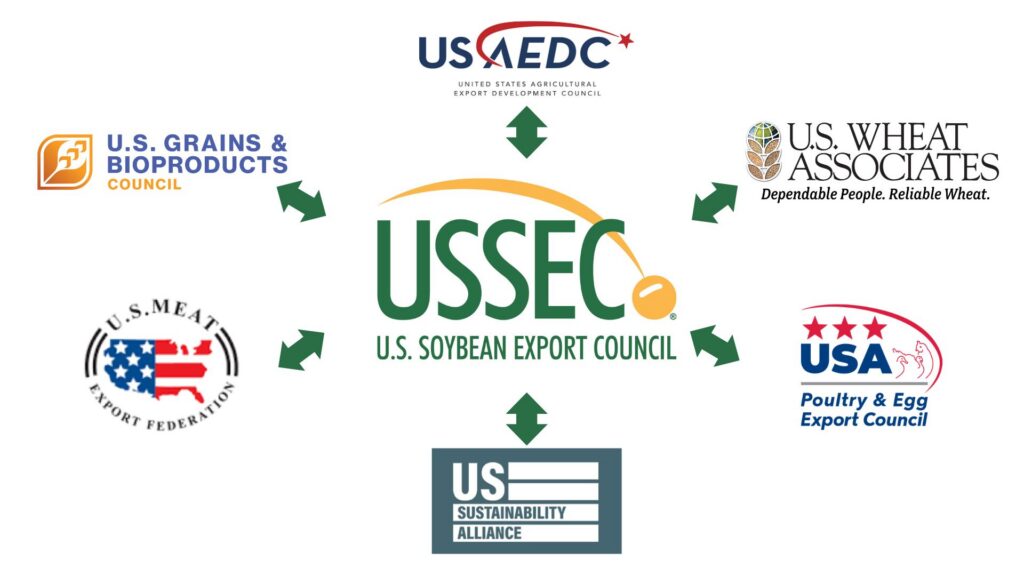
As an organization, USSEC believes that working together elevates everyone.
“USSEC actively seeks opportunities to work with other agricultural export organizations,” says Colby Pinkstone, executive director of international strategy for USSEC. “We are an active member of the U.S. Agricultural Development Export Council, which aims to preserve, differentiate and expand American agricultural exports.”
USSEC willingly serves as a leader for all U.S. agricultural exports, as CEO Jim Sutter demonstrated as chair of that council a few years ago.
“We work together on common issues and create a unified voice for U.S. agriculture,” Pinkstone adds. “A rising tide lifts all boats, so encouraging international customers to purchase U.S. products benefits U.S. Soy.”
Nourishing strong relationships with similar organizations allows USSEC to serve global customers better. The U.S.-China Agricultural Products Trade Cooperation Forum, an annual event USSEC co-hosts with the U.S. Grains and BioProducts Council in China, exemplifies this. This and other efforts highlight the power of collaboration to elevate preference and demand for U.S. products – including soy.
Commodity Collaboration
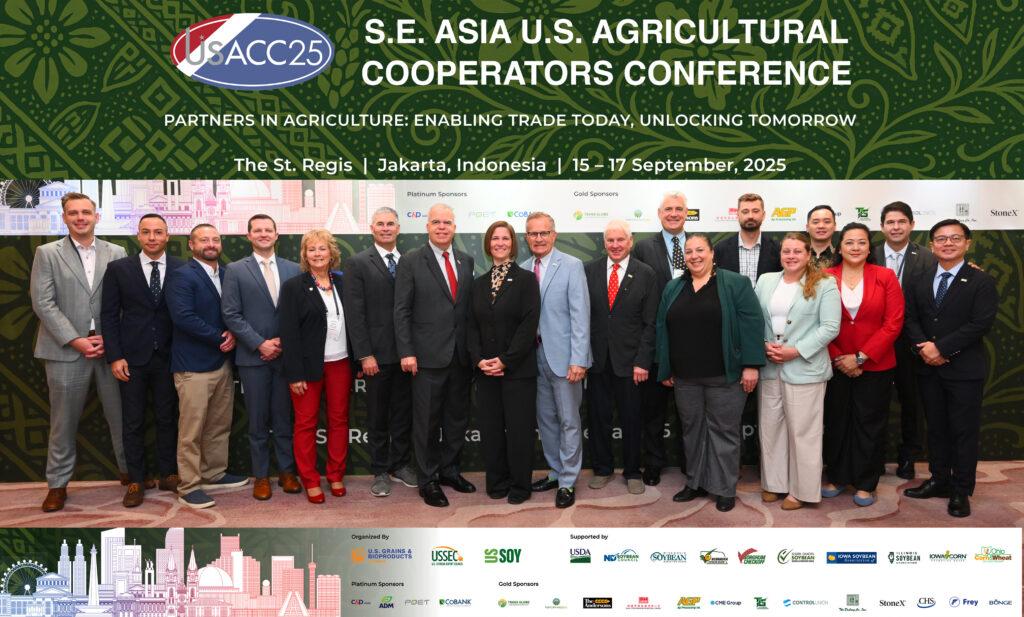
For years, USSEC has teamed up with organizations like the U.S. Grains and BioProducts Council, U.S. Wheat Associates and U.S. Department of Agriculture Foreign Agricultural Service to host Cooperators Conferences in various regions around the world.
For example, in June 2025, a conference in Cancun, Mexico focused on animal nutrition strategies for animal feed, aquaculture, poultry and swine companies in the Americas. In September 2025, 400 leaders from more than 20 East Asian countries gathered in Jakarta, Indonesia, to focus on food security, trusted supply chains and long-term agricultural trade.
“These events foster collaboration between U.S. agriculture and regional customers,” says Pinkstone. “Attendees often purchase multiple U.S. commodities, and they value connecting with all their U.S. suppliers in one place. Many participating U.S. exporters also sell multiple commodities, so they can discuss their entire portfolios.”
The Cooperator Conferences showcase the efficient logistics and abundant, sustainable supply of U.S. agricultural products.
Value-Added U.S. Exports
U.S. Soy gets exported as more than just soybeans, meal and oil.
“Domestically, animal agriculture consumes the most soy,” Pinkstone explains. “U.S. meat and poultry exports add value to U.S. Soy before exporting it.”
That relationship leads USSEC to exciting opportunities to promote multiple U.S. exports.
For example, in Vietnam, USSEC and the Indiana Soybean Alliance collaborated with the U.S. Meat Export Federation and others to host a Traditional Cake Festival in Ho Chi Minh City. Teams competed to creatively make sticky rice cakes using U.S. pork ribs combined with 30% U.S. Soy in the filling.
When India reduced its tariff on turkey imports, USSEC teamed up with the U.S.A. Poultry and Egg Export Council to host a viewing of an International Cricket Championship finale in Bangalore, India. The event menu featured U.S. turkey and U.S. soy nuts while highlighting the importance of protein in diets to participants from Bangladesh, India, Nepal and Sri Lanka. This was part of USSEC’s Right to Protein initiative, a public health and nutrition effort emphasizing the role of protein in food security.
Promoting U.S. Sustainability
As a member of the U.S. Sustainability Alliance, USSEC highlights the documented sustainability of U.S. Soy and other commodities. The Alliance targets markets that prioritize that quality in their imports.
For example, a small U.S. delegation visited Denmark, Sweden and Poland in October 2025 to see how local farmers, industries and governments prioritize sustainability. The U.S. representatives explained U.S. regulatory frameworks, conservation programs and industry-led verification systems, which all apply to U.S. Soy and other commodities. While observing European practices, they described the U.S. approach to sustainable productivity, strong federal laws and long-standing conservation programs.
Then in December 2025, a group of eight European journalists visited 14 agricultural, fishery and food production operations during a five-day tour through Maine and Massachusetts. Participants observed U.S. sustainability practices firsthand.
“Our work with the U.S. Sustainability Alliance helps correct misperceptions about U.S. agriculture by delivering facts and regulation-focused information,” Pinkstone explains. “As we demonstrate the depth of science, law and monitoring that supports U.S. sustainability programs, we strengthened the credibility of efforts like the U.S. Soy Sustainability Assurance Protocol, or SSAP.”
Interviews following the journalist trip to the U.S. showed that several journalists shifted their preconceived assumptions about U.S. agriculture. Working together, USSEC and other Alliance members increase visibility and strengthen understanding of sustainability efforts in the United States.
Partially funded by the Soy Checkoff