U.S. Soy Strengthens Partnership with China at CIIE 2025
The U.S. Soybean Export Council (USSEC) concluded a week of high-level engagements in China that began in Beijing and continued at the 8th China International Import Expo (CIIE) in Shanghai, reinforcing more than 40 years of U.S.–China agricultural cooperation and a shared commitment to food and feed security. This year marked USSEC’s eighth consecutive participation in CIIE, reflecting the U.S. Soy industry’s enduring presence and readiness to collaborate with Chinese partners.
Strengthening Agricultural Dialogue in Beijing
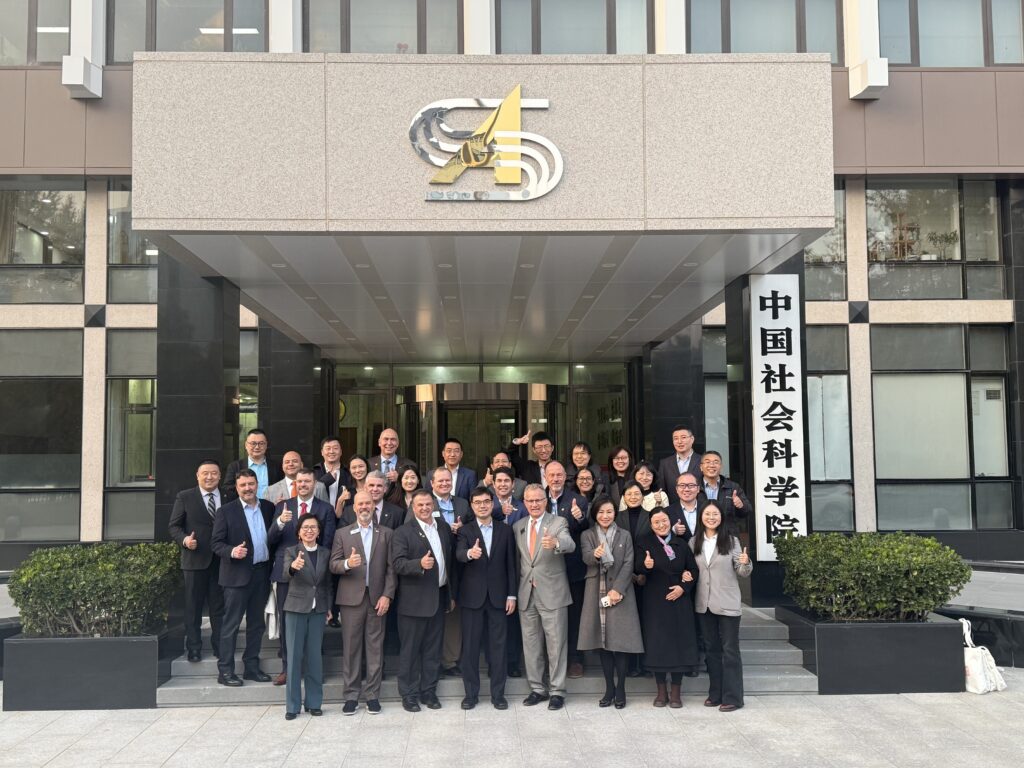
The mission opened in Beijing with discussions at the Institute of World Economics and Politics (IWEP) at the Chinese Academy of Social Sciences (CASS), followed by a meeting with the Ministry of Commerce (MOFCOM), led by Vice Minister Li Chenggang. The exchanges focused on opportunities to deepen agricultural trade and reflected a shared recognition of the importance of stable, predictable trade in supporting food and feed security.

Throughout these meetings, USSEC emphasized the core advantages of U.S. Soy: reliable supply, consistent quality, and verified sustainable production aligned with China’s goals for high-quality agricultural development. U.S. grower leaders participated directly in these discussions, including Scott Gaffner, United Soybean Board Director and soybean farmer from Illinois; Andrew Moore, American Soybean Association Director and soybean farmer from Mississippi; and Jason Swede, United Soybean Board Director and soybean farmer from New York. They provided perspectives from their farms, underscoring the importance of China as a key export destination and longstanding partner for U.S. Soy.
U.S. Soy Leadership at CIIE
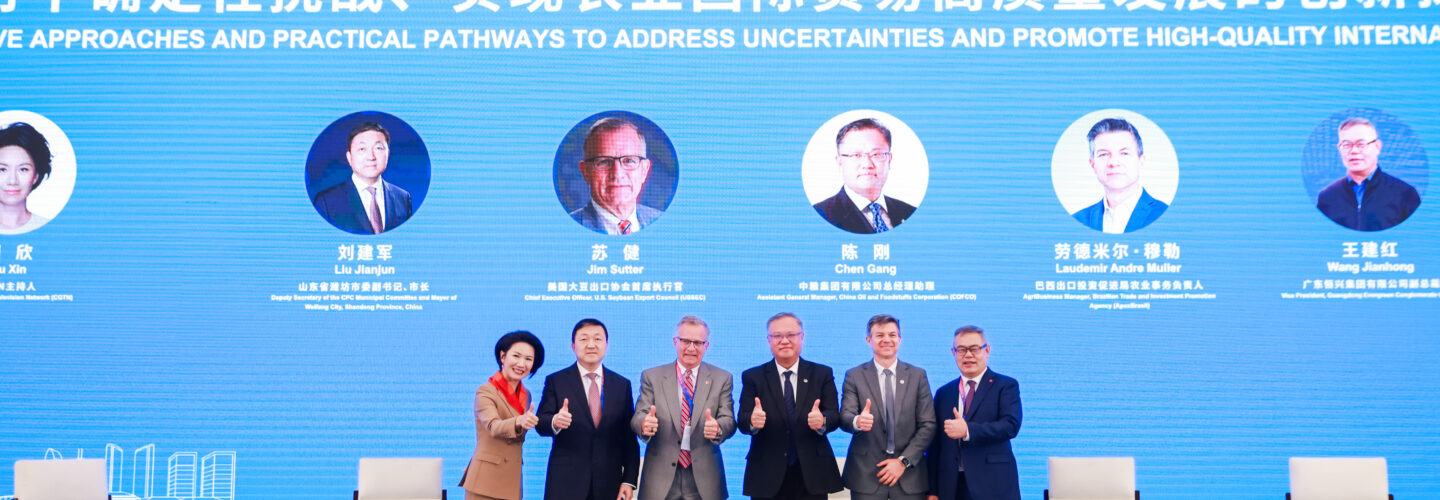
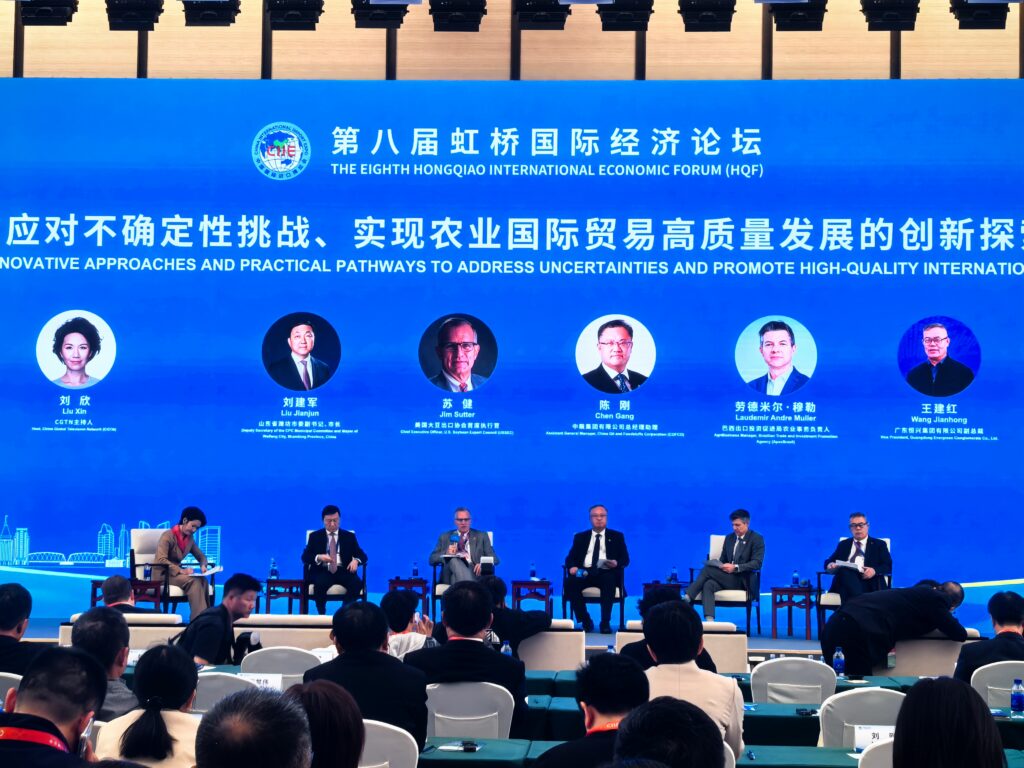
USSEC continued its engagement in Shanghai at CIIE, where programming focused on three areas essential to the future of agricultural cooperation: market access and open trade, technical collaboration and innovation, and sustainability and climate-smart agriculture. USSEC CEO Jim Sutter spoke at the Hongqiao International Economic Forum Agriculture Sub-Forum, co-hosted by the Ministry of Agriculture and Rural Affairs and the Ministry of Commerce, highlighting the importance of partnership, transparency, and resilience in agricultural trade. He also referenced USSEC’s ongoing cooperation with Chinese research and industry partners, including the China–U.S. Soy Value Chain Innovation Center (SIC), which supports improvements in feed efficiency, processing capacity, and low-carbon development.
U.S.–China Agricultural Trade Cooperation Forum
USSEC co-hosted the 2025 U.S.–China Agricultural Products Trade Cooperation Forum with the U.S. Grains & BioProducts Council (USGBC) and the China Chamber of Commerce of Foodstuffs and Native Produce (CFNA), with support from the Shanghai People’s Association for Friendship with Foreign Countries (SPAFFC). The forum examined how both countries can reduce supply-chain risk, strengthen industry resilience, and advance a more sustainable and mutually beneficial agricultural trade relationship. U.S. grower leaders reiterated the value of China as a critical market for U.S. Soy and noted the strong alignment between U.S. Soy’s low-carbon farming practices and China’s green development priorities.
Showcasing U.S. Soy’s Innovation and Sustainability
At the USSEC booth, visitors experienced U.S. Soy’s farm-level sustainability through an immersive virtual reality farm experience and explored soy-based culinary applications through a live cooking demonstration. The booth welcomed representatives across the feed, food, and processing sectors, reinforcing USSEC’s commitment to partnership and technical cooperation across the full value chain.

A Shared Commitment to the Future
For more than four decades, the U.S. Soy industry has collaborated with Chinese partners through knowledge sharing, technical training, and innovation. The relationship has progressed from early technology transfer to co-creation of solutions that support China’s transition toward high-quality and low-carbon agricultural development.
Reflecting on the mission, Carlos Salinas, Executive Director – East Asia at USSEC, noted, “U.S. Soy and China have built a relationship grounded in trust, technical cooperation, and shared goals for sustainable food and feed production. As China continues to advance high-quality development in agriculture, we remain committed to working side by side to support innovation, open trade, and long-term industry resilience.”

Partially funded by the Soy Checkoff.
#####