U.S. Soy and Colombian Fish Farms: How Partnership Drives Innovation in Aquaculture
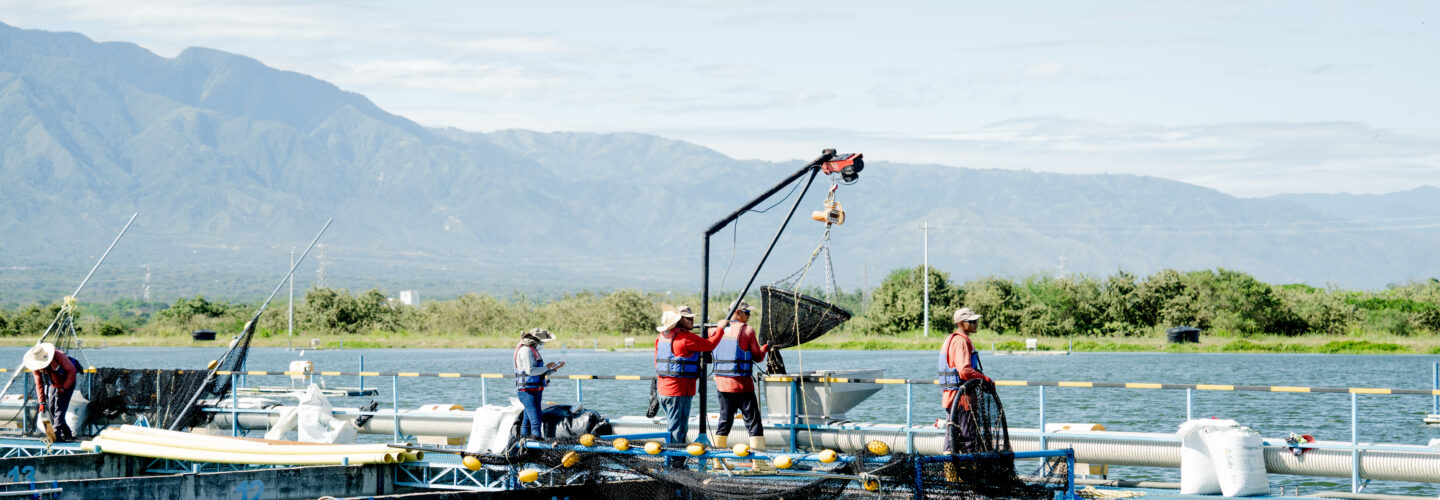
Across the beautiful countryside of Colombia, fish farms are reshaping the future of food. What began as a way to fill the gap left by dwindling wild fish stocks has grown into something much bigger: a thriving aquaculture industry that supports local communities, powers exports, and sets new standards for sustainability.
Behind this transformation is a partnership built on trust and collaboration between Colombian farmers and the U.S. Soybean Export Council (USSEC). Together, we’re proving that when people share knowledge and high-quality ingredients across borders, the results ripple everywhere: healthier fish, stronger businesses, and a more secure food system for us all.
Knowledge that travels across borders
For aquaculture producers, success starts with practical knowledge. That’s why USSEC has invested in training programs that give Colombian fish farmers access to the latest science, whether in university classrooms or in hands-on demonstrations at local farms. These experiences spark ideas that farmers bring back to their operations – from new production systems to better approaches to certifications and sustainability.
Here’s how Diana Milena Pasos, Production Manager at Piscicola Botero Farm, explains the experience of attending one of these programs: “The training course offered by USSEC at Auburn University was very beneficial because of the technical information received and the interaction with different producers from other countries, seeing other production systems, and other ways of producing with different technologies.”
Other producers, like Eugenio Silva, CEO at Los Caimos Farm, have implemented the new knowledge into competitive businesses that help them scale their farms and prepare for the challenges of international markets.
By pairing technical support with local ingenuity, USSEC is helping Colombian fish farmers meet the highest market standards worldwide while empowering their local communities.
Feeding fish, feeding growth
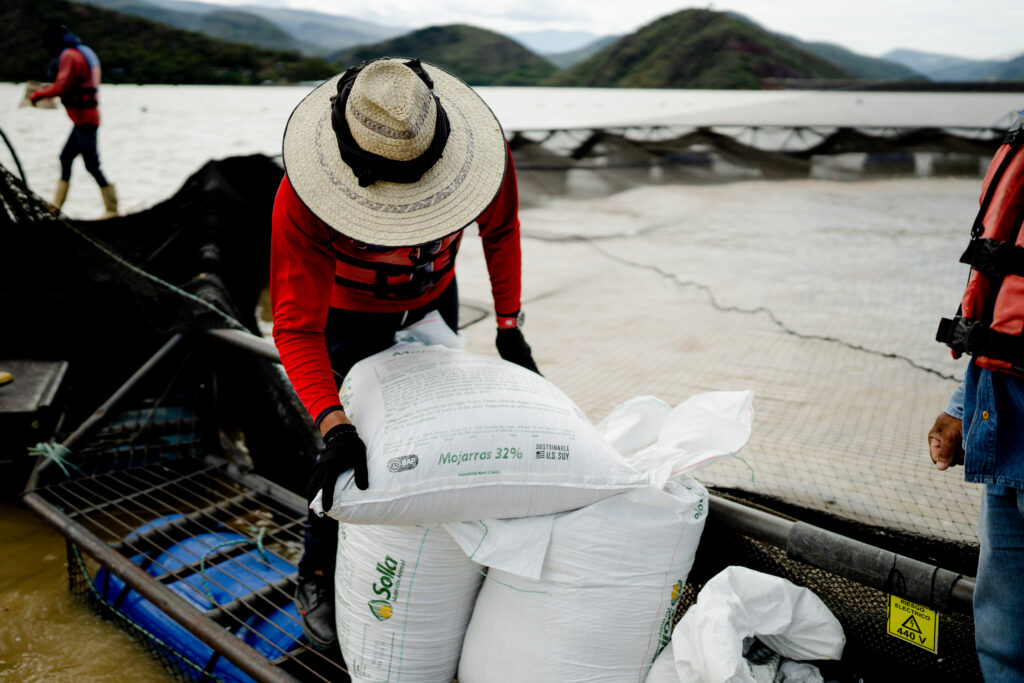
Beyond the importance of knowledge sharing, USSEC also understands that nutrition is at the heart of aquaculture growth and sustainability. From hatcheries to harvest, U.S. Soy has become a cornerstone ingredient in Colombian feeds, helping fish grow faster and healthier.
At Piscicola Botero Farm (Marpez), Hatchery Coordinator Diego Soto highlights why those early life-stage diets matter so much: “Nutrition in the early stages for tilapia fry is quite important since it is a period in which the fish is developing. That’s why feeds must include excellent quality, nutrition, and ingredients such as American soy.”
Farmers across the country now see firsthand how soy-optimized feed shortens production cycles, improves texture and quality, and boosts profitability. At Contegral – Grupo Bios Neiva, for example, feed formulations built around U.S. Soy have allowed producers to deliver consistent performance while keeping pace with global demand. For these farmers, soy is not only an ingredient but also the foundation of growth.
Innovation in action: IPRS
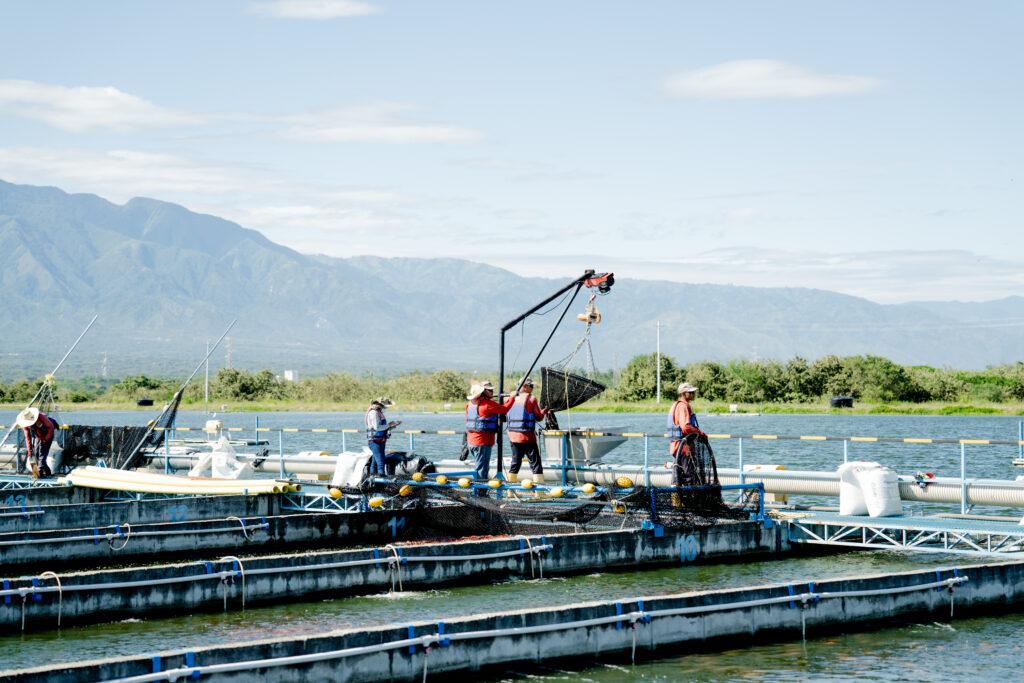
The aquaculture industry is under constant pressure to scale, but scaling up sustainably requires innovation. Thanks to the adoption of the In-Pond Raceway System (IPRS), Colombia has become a regional leader in scaling sustainably.
USSEC has played a major role in the introduction of this technology to the country, and farms like Los Caimos are now producing and shipping hundreds of thousands of pounds of fish into foreign and domestic markets each week using the system.
IPRS adoption coupled with good farm management results in improved feed conversion, water quality, and overall efficiency, ultimately producing more fish with fewer resources1. At Los Caimos, Product Coordinator Nel Antonio Luna Guena sees the benefits daily: “The animal grows in optimal conditions, performs well, has good meat texture, and provides good feed conversion at the end of the crop.”
For Colombian producers, the shift to IPRS has led not only to higher yields but has also opened doors to international certifications and new export markets, proving that sustainability and profitability can go hand in hand.
From rivers to resilience
Innovation alone, however, isn’t the full story. Aquaculture in Colombia has also been a lifeline for communities adapting to change. As the owner of Tilapias CMA SAS, Carlos Mario Cifuentes, recalls, just a few decades ago, most freshwater fish sold in local markets were caught in the wild by artisanal fishermen. But as catch volumes dwindled due to overfishing and climate change, communities had to find another path forward.
Farmed tilapia emerged as the solution. The transition to tilapia farming not only reduced pressure on rivers but also created new economic opportunities for rural families. Today, aquaculture provides jobs, generates export revenue, and even supports the production of other crops. At Los Caimos Farm, for example, wastewater from fish ponds is used to irrigate rice fields, creating a circular economy that turns byproducts into new value.
Stories like these show how aquaculture is more than just farming – it’s about weaving resilience into communities and creating livelihoods that can withstand environmental and economic pressures.
A model for global partnership
At USSEC, we believe that our partnerships with fish farms in Colombia show what’s possible when people share resources and knowledge across borders. From U.S. Soy farmers to Colombian fish producers, everyone in the value chain contributes to a common goal: feeding people sustainably while protecting the planet.
The results are clear: thriving businesses, healthier fish, and a stronger food system that connects rural communities in both countries to global markets.
This is what partnership looks like in practice: real people, real farms, and real impact. And it’s a model we hope others will learn from as we continue working together to build a more sustainable and food-secure future.
This article is funded in part by the Soy Checkoff.
[1] https://ussec.org/wp-content/uploads/2025/07/USSEC_2022_IPRS_Manual_220120_Web.pdf