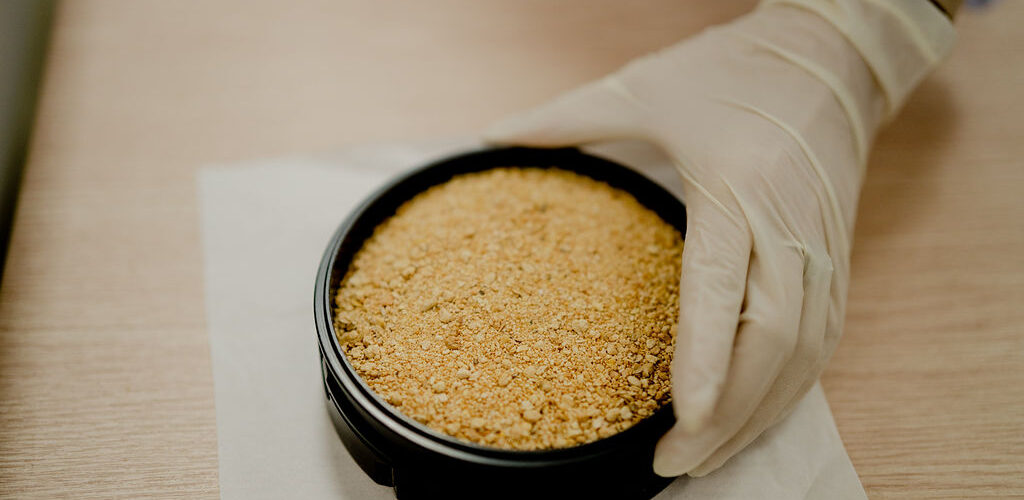
Trial in Türkiye Shows U.S. Soy Protein Concentrate Can Replace Fish Meal in European Sea Bass Diets – Without Compromising Performance
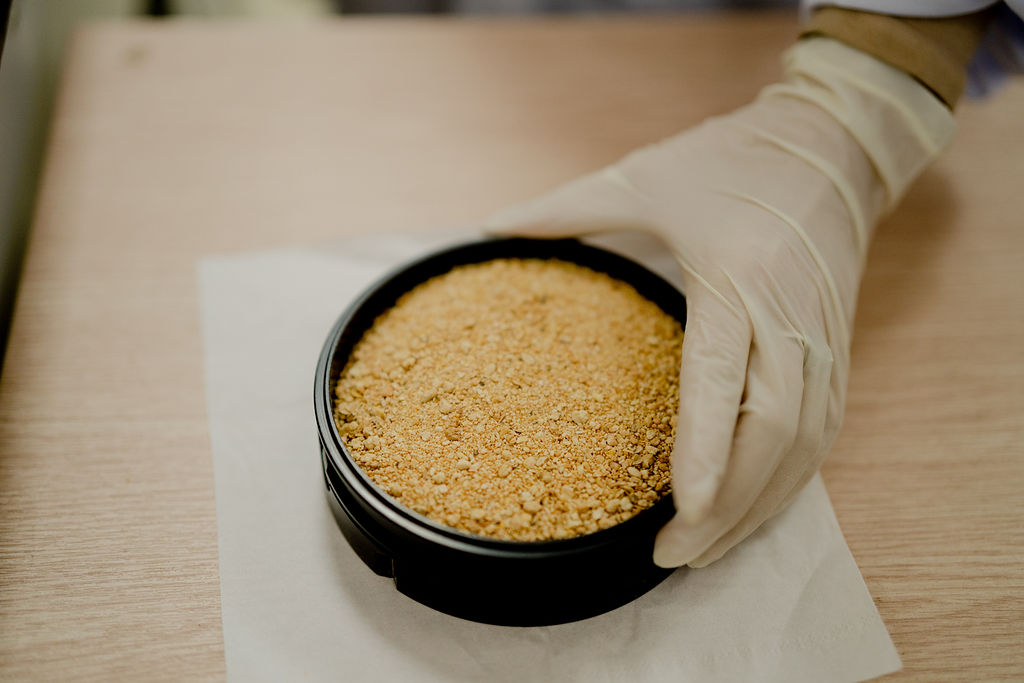
As global demand for farmed seafood continues to climb, aquafeed formulators are racing to identify scalable, cost-effective protein alternatives that perform under the demands of modern, intensive production.1 New research conducted in Türkiye and supported by USSEC delivers compelling evidence that soy protein concentrate (SPC) made from U.S. soybeans can replace fish meal in European sea bass (Dicentrarchus labrax) diets at high inclusion rates – without sacrificing growth, feed efficiency or fish health.
The findings point to significant market expansion opportunities for U.S. Soy across both cage culture and recirculating aquaculture system (RAS) sectors.
The Challenge: Feeding a Growing Industry
Marine aquaculture is one of the fastest-growing food production sectors in the world, and European sea bass remains one of its highest-value species across the Mediterranean and beyond.2 For decades, fish meal has been the gold standard protein source in carnivorous fish diets. But with wild fish stocks tightening and fish meal prices increasingly volatile,3 the industry urgently needs ingredients that match its performance, scale with demand and align with sustainability commitments downstream.
Plant-based proteins are the leading candidates, but not all perform equally. Some introduce digestive challenges or generate fecal waste profiles that complicate water quality management in modern RAS operations.4 The pressing question for feed manufacturers and producers across the Europe, Middle East and North Africa region has been a practical one: where does U.S. Soy fit in the formulation?
The Trial: A First-of-Its-Kind Comprehensive Assessment
Conducted by Aquaspin Ltd. in partnership with Çukurova University and feed manufacturer Özpekler Yem, the project evaluated five experimental diets in which SPC derived from U.S. soybean meal replaced 0%, 25%, 50%, 75% and 100% of the fish meal in a commercial-style feed formulation.
Over an eight-week trial in a fully automated marine RAS, juvenile sea bass were hand-fed to satiation twice daily. Researchers tracked growth, feed conversion, biometric indices and — uniquely — fecal characteristics and particle size distribution, which directly affect solids capture efficiency in intensive culture systems.
The Results: Strong Growth, Practical Insights
Across every inclusion level, growth performance remained statistically comparable to the fish meal control:
- Final body weight ranged from 114.5 grams to 120.2 grams per fish across all treatments.
- Feed conversion ratio held tight at 1.06 to 1.14.
- Survival was 98.9% to 100%.
- Daily feed intake showed no significant differences, confirming strong palatability of the SPC-based diets.
In practical terms: U.S. SPC successfully replaced up to 100% of fish meal in the diet without compromising the metrics that matter most to producers – weight gain, feed efficiency and fish health.
The study also unlocked new insight into fecal characteristics. Moderate SPC inclusion levels of 25% to 50% produced the most stable fecal aggregates, supporting efficient solids removal in RAS environments. At higher inclusion levels of 75% to 100%, fecal particles trended toward smaller intermediate fractions, suggesting that targeted formulation and processing adjustments – such as functional binders, extrusion optimization or ingredient blending – can help unlock SPC’s full potential at maximum inclusion.
The Case for Expanded Use
For feed manufacturers, the takeaway is clear: U.S. Soy protein concentrate is a technically validated, scalable alternative to fish meal in marine aquafeed, with meaningful runway for expanded use across European sea bass and other carnivorous marine species. For producers, the benefits extend beyond growth performance – reduced reliance on volatile fish meal supplies, more predictable input costs and a stronger sustainability story for the buyers further down the value chain.
The trial reinforces what USSEC has invested in for years: building scientific confidence in U.S. Soy as the alternative protein of choice for carnivorous marine species. With European sea bass serving as a model species for other high-value carnivorous fish cultured globally, the implications stretch well beyond Türkiye and the Mediterranean.
Partially funded by USDA FAS
[1] State of the World’s Fisheries and Aquaculture, FAO, 2024
[2] European Aquaculture Production Report, FEAP, 2025
[3] Hooked on scarcity: Navigating aquafeed nutrition amid looming marine ingredient shortages,
Rabobank, 2025
[4] Fanizza et al. Practical low-fishmeal diets for rainbow trout (Oncorhynchus mykiss) reared in RAS: Effects of protein meals on fish growth, nutrient digestibility, feed physical quality, and faecal particle size. 2023. https://www.sciencedirect.com/science/article/pii/S2352513422004318
[5] Practical low-fishmeal diets for rainbow trout (Oncorhynchus mykiss) reared in RAS: Effects of
protein meals on fish growth, nutrient digestibility, feed physical quality, and fecal particle size,
Fanizza et al., 2023