
Strengthening East Asia Dialogue on U.S. Soy
The U.S. Soybean Export Council (USSEC) hosted the 2025 U.S. Soy Outlook Conference series across East Asia in November, convening industry leaders, buyers, technical experts and U.S. Soy farmer representatives in Japan, Taiwan, Korea and China. The events provided a platform to share timely insights on global soybean supply and demand trends, crop quality, sustainability developments and evolving opportunities for the region’s food and feed sectors.
Across all four markets, discussions focused on practical market intelligence and technical exchange, including global trade flows, soybean meal utilization, supply reliability and approaches to strengthening resilient soy value chains amid shifting market conditions.
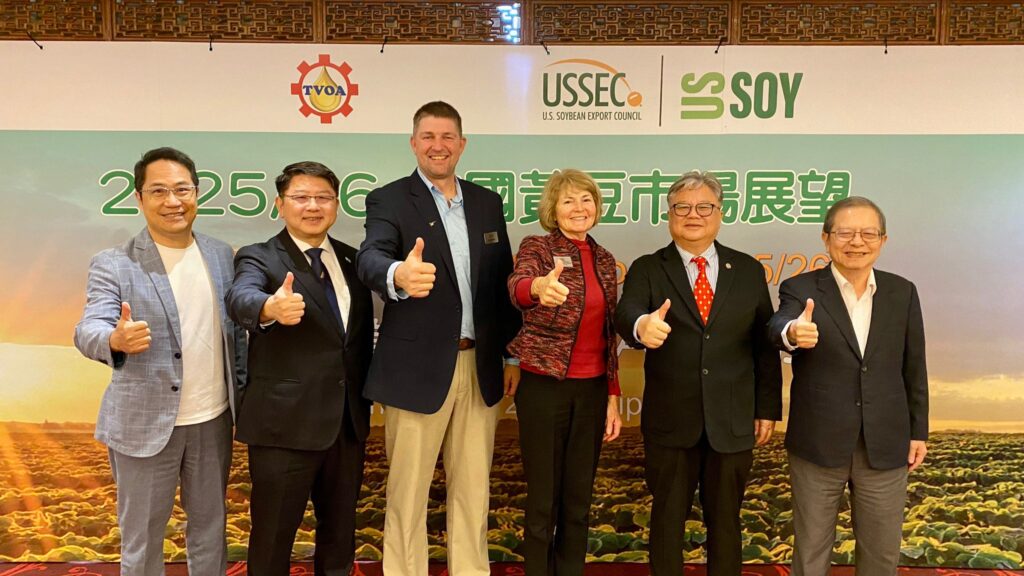
Supported by USDA Foreign Agricultural Service (FAS) offices across the region, the conferences reinforced collaboration between U.S. agriculture and key East Asian markets. In Taiwan, the conference was held in partnership with the Taiwan Vegetable Oil Manufacturers’ Association.
Farmer perspectives from the field
U.S. Soy farmers played a central role throughout the series, providing firsthand insights into production conditions and long-term stewardship efforts. They included Matthew Guedon, United Soybean Board Director from Mississippi; Brent Renner, United Soybean Board Director from Iowa; Chad Warner, Ohio Soybean Council Treasurer and Roberta Simpson-Dolbeare, ASA Director, USSEC Second Vice Chair and Illinois soybean farmer.
The farmers offered direct perspectives on the 2025 U.S. soybean crop, advances in production efficiency and the commitment of U.S. growers to delivering consistent, high-quality soybeans to global markets.
Carlos Salinas, Executive Director for East Asia at USSEC, spoke across all four conferences on global supply, demand and price dynamics, sharing insights into trade flows, production trends and market balance considerations. Sustainability was highlighted as a key discussion theme, including the role of the U.S. Soy Sustainability Assurance Protocol (SSAP) in providing verified, transparent assurance of responsible soybean production.
“Across East Asia, we saw strong engagement from industry partners navigating a complex global environment. These discussions help ensure buyers, processors and feed manufacturers have clarity on supply conditions, quality expectations and sustainability alignment as they plan for the year ahead,” said Salinas.
Market focus across East Asia
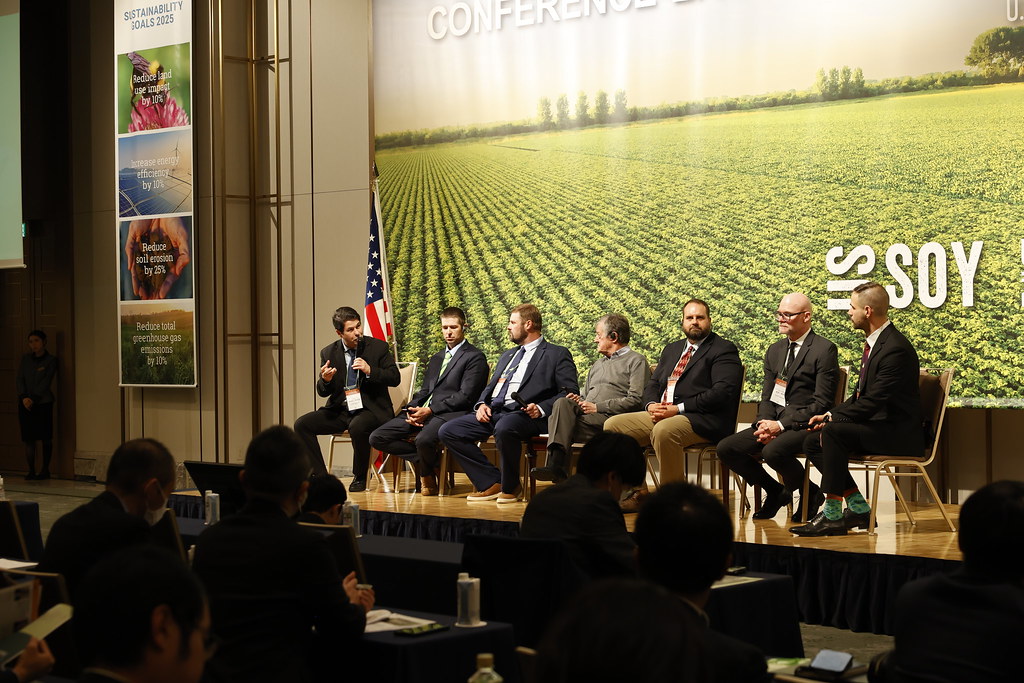
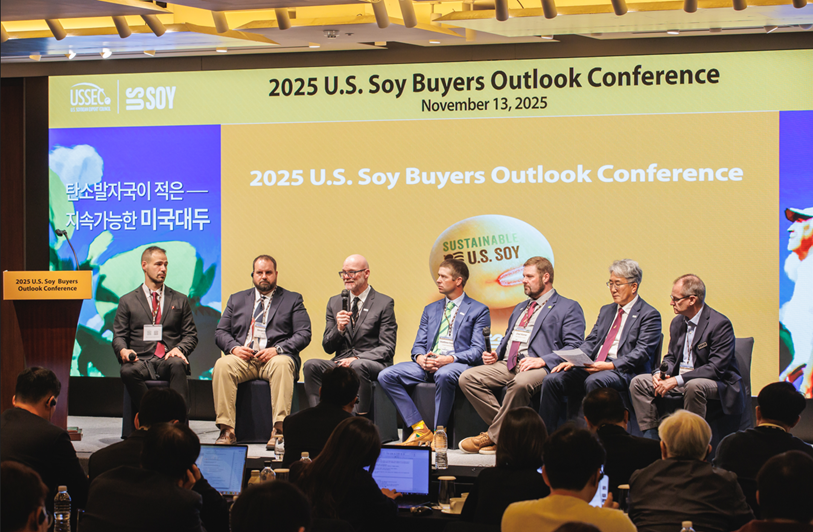
In Japan, Taiwan and Korea, sessions examined the quality of the 2025 U.S. soybean crop, global oilseed supply dynamics, soybean meal value and innovation in feed and food applications. Discussions explored how sustainability, traceability and production efficiency are increasingly shaping purchasing decisions across food manufacturing, crushing and animal nutrition sectors.
Participants also emphasised the importance of collaboration between growers, buyers and technical specialists in supporting supply reliability, performance consistency and responsible sourcing. Across these three markets, USSEC engaged with key industry stakeholders and Sustainable U.S. Soy label users, creating opportunities for technical exchange and market feedback to support continuous improvement in service and supply alignment.
China: innovation and Soy Value Chain Innovation Center collaboration
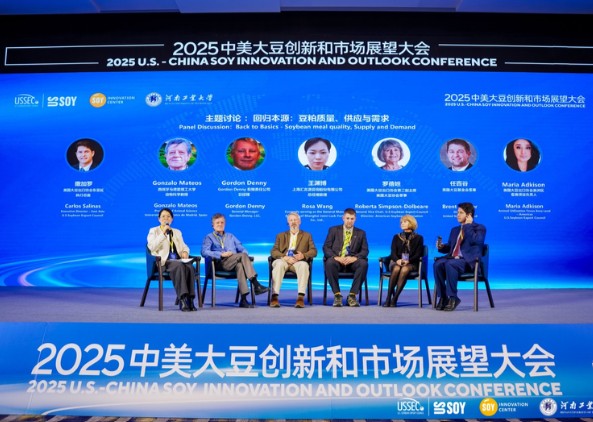
The final stop of the series took place in China with the U.S.–China Soy Innovation and Outlook Conference held in Zhengzhou, Henan. The event was integrated with the U.S.–China Soy Value Chain Innovation Center (SIC) annual conference and organized by USSEC in collaboration with Henan University of Technology.
The conference explored global soybean trends, soybean meal utilization, sustainability-driven innovation and the future of U.S.–China cooperation across the soy value chain. The SIC continues to support China’s agricultural development priorities through structured training programmes and applied research covering food, feed and processing sectors.
Since its establishment, the SIC has delivered multiple technical training sessions annually, strengthening industry capabilities and facilitating knowledge exchange between U.S. and Chinese stakeholders. Discussions in China also highlighted advancements in feed efficiency, processing innovation and responsible production practices aimed at supporting long-term industry development.
Regional engagement and continuity
Collectively, the 2025 East Asia Outlook Conference series enabled stakeholders to engage directly with U.S. Soy farmers, technical specialists and trade experts, supporting clearer understanding of supply conditions, sustainability priorities and market outlooks. Through ongoing collaboration with regional partners, industry associations and government stakeholders, USSEC continues to support informed decision-making and long-term partnerships that contribute to a transparent and resilient soy value chain across East Asia.
Partially funded by the Soy Checkoff
#####