Soy Food Crop Reports for the 2026 Growing Season
The Soy Food Crop reports are provided by USSEC in collaboration with industry partners to keep customers apprised of the specialty soy crop’s progress across the U.S. throughout the growing season. The reports will be updated monthly. Please refer to the contact information in each regional update to request additional data, or contact Will McNair, Director, Soy Foods, Oil and Global Team Development, at wmcnair@ussec.org.
September 2026 Soy Food Crop Report
Wisconsin
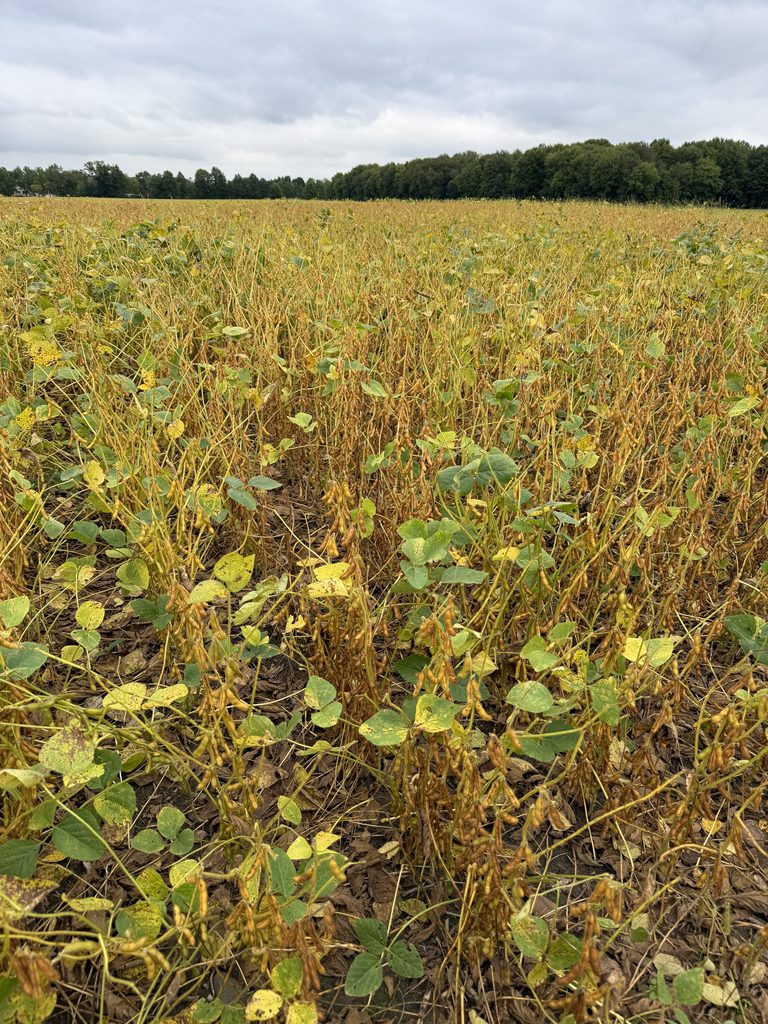
Soybean harvest across southern Wisconsin is running a little behind normal this year. In a typical year, we’d start to see a few early beans trickle in off sandier ground by mid-September, but the recent stretch of cooler temperatures and rainfall has slowed the crop’s finish. Right now, we’re probably still about 7 to 10 days out from any meaningful new-crop harvest activity. That said, fields are clearly starting to turn. Earlier maturity varieties are dropping their leaves and pushing toward full maturity, while later varieties are still noticeably green. On the plus side, the good moisture we picked up through August and into September carried the crop through pod fill in good shape, which should translate into solid seed size and test weights this year. With that much moisture available during fill, even if yields land somewhere around average, we’re expecting the quality and size of the beans to be good. As for yields, it’s still a mixed bag depending on the grower and the location. We won’t have a real read until combines start rolling, but our best estimate for the draw area right now is an average crop.
Cameron Hilgenberg, DeLong Company
cameron.hilgenberg@delongcompany.com
Ohio
Our soybeans have continued to progress well through the final stages of seed fill and are now moving toward maturity. Earlier this month, our fields showed strong pod development, healthy plants and good seed fill, and we are now beginning to see the crop transition toward harvest. We currently expect soybean harvest to begin the second week of October, depending on variety, field conditions and weather. September has brought continued rainfall along with generally moderate temperatures. The added moisture has been beneficial through the end of seed fill, although we will be looking for some drier weather as the crop matures and fields begin to dry down for harvest. It is still a little early to give a firm yield estimate, but overall we are encouraged by what we are seeing in the fields. Pod set and seed fill have looked strong, and we are optimistic about both soybean quality and seed size as we head toward harvest.
Gracie Schwartz, Shwartz Farms
gschwartz@westfieldgrain.com
North Dakota
Harvest activity has increased across the Upper Midwest as growers take advantage of favorable weather conditions. Soybean harvest has begun in some locations, with yields reported as variable depending on planting date, moisture availability and weather conditions throughout the growing season. Growers are monitoring grain moisture and field conditions closely as harvest activity expands. If favorable weather continues, harvest progress is expected to accelerate over the next one to two weeks. Soybean quality appears to be good based on early harvest samples.
Scott Sinner, SB&B
ssinner@sb-b.com
Additional Information
Crop updates are submitted monthly on a voluntary basis by partners across U.S. soy food bean-growing regions and may not include every region in each report. For additional information, contact Will McNair, director of Soy Foods, Oil and Global Team Development, at wmcnair@ussec.org.
August 2026 Soy Food Crop Report
Wisconsin
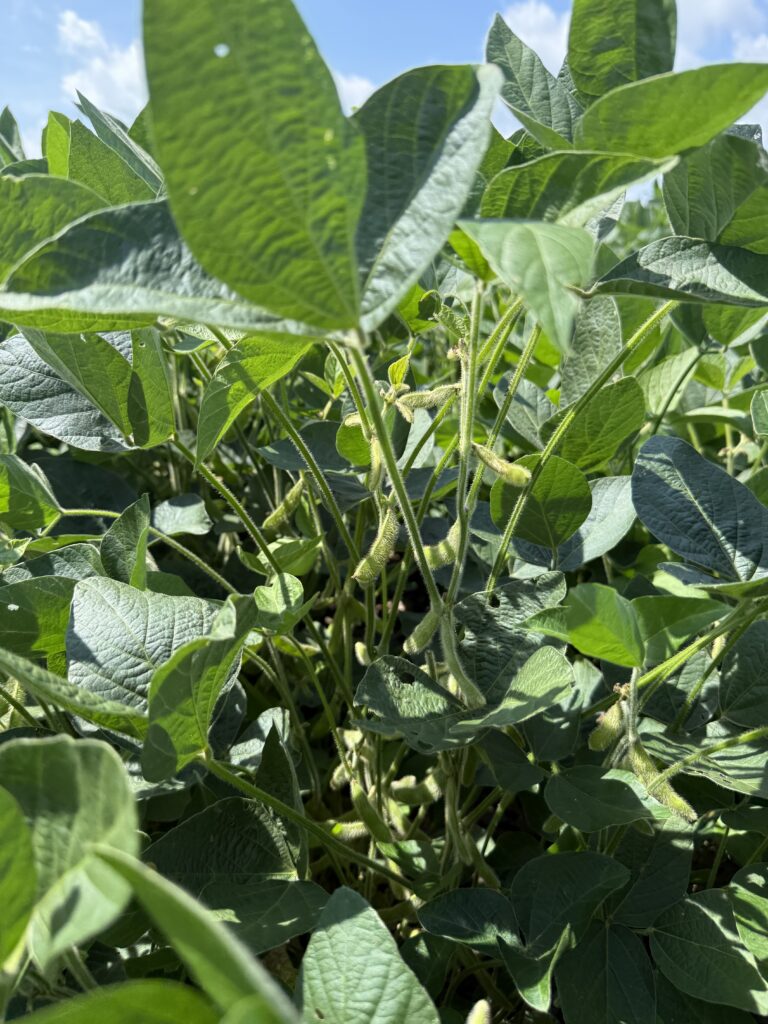
Soybean conditions across southern Wisconsin continue to look very good as the crop moves through the second half of August. Ample rainfall from late July through the first half of August has arrived at an important time for the crop. Soil moisture remains strong across most of the area, and moisture stress has been limited.
Most soybean fields are now well into the pod-fill stages, with pods filling and beans beginning to increase in size. This is one of the most important periods of the growing season for soybean moisture needs, and continued rainfall should support seed development and help the crop maintain its yield potential. Consistent rainfall has also eased moisture concerns compared with earlier in the summer.
As August progresses, growers will continue to monitor disease pressure. White mold and sudden death syndrome are becoming more noticeable in some fields and will be watched closely as the crop continues filling pods. Overall, the soybean crop is in good condition heading into the final stretch of August and has an opportunity to finish strong if favorable conditions continue.
Cameron Hilgenberg, DeLong Company
cameron.hilgenberg@delongcompany.com
Michigan
In Mid-Michigan, soybeans continue to develop, with pods filling and most plants currently in the R3 to R6 growth stages.
Much of Michigan is currently experiencing abnormally dry conditions, and timely rainfall will be important to support crop development through the coming weeks. Overall, the crop is rated as good to great, though conditions are not considered excellent.
Ohio
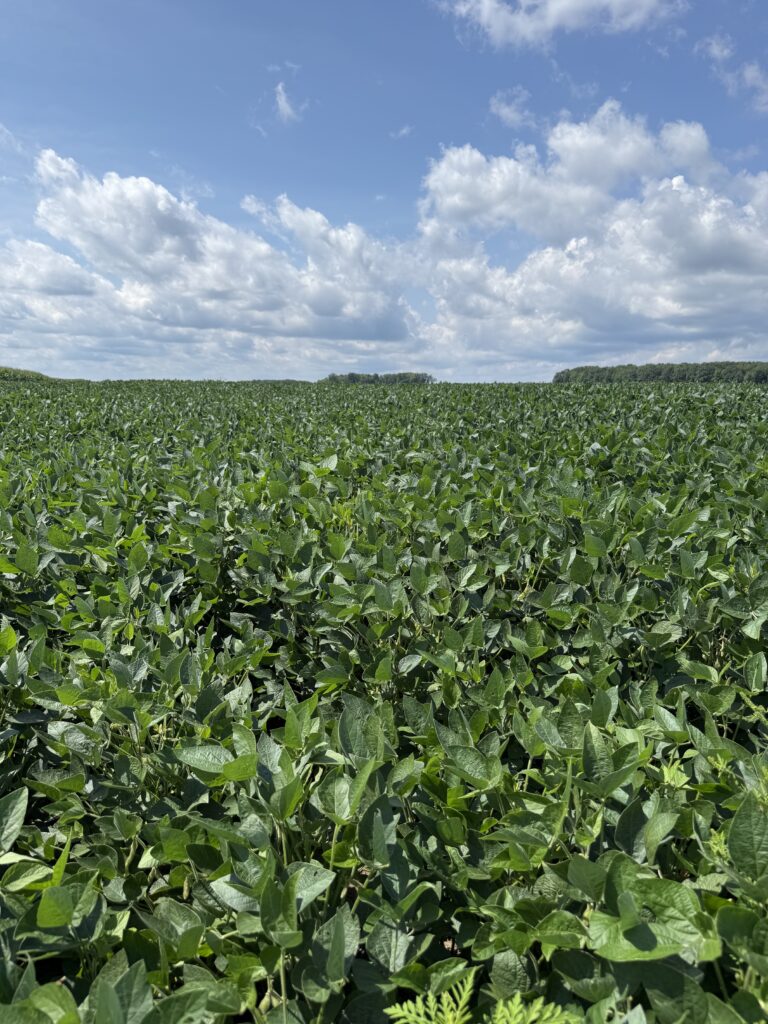
Soybean planting at Schwartz Farms was completed June 8 following a cool, wet spring that delayed fieldwork. The crop has continued to develop through the summer and is now well into the reproductive stages, with pod setting and pod filling underway.
Recent weather has been generally favorable, with seasonable temperatures and periodic rainfall across Northeast Ohio. Rainfall has varied by location, but approximately 2.5 inches has been received near Schwartz Farms so far in August, providing important moisture as soybeans progress through pod fill.
Growers are continuing to monitor crop health and pod development closely as the crop progresses toward maturity.
Gracie Schwartz, Schwartz Farms
gschwartz@westfieldgrain.com
North Dakota
The soybean crop across the Upper Great Plains is generally experiencing dry conditions. While some smaller areas have received adequate moisture, much of the region remains below normal moisture levels for the season.
At this point in the growing season, additional rainfall over the next two weeks will be important to maintain current crop conditions. The forecast calls for continued above-average temperatures and below-normal moisture, which could lead to further deterioration in crop condition.
Higher temperatures have also accelerated soybean maturity, and harvest may begin earlier than average. Dry conditions may contribute to smaller seed size, although the final impact will not be known until the soybeans dry down ahead of harvest.
Scott Sinner, SB&B
ssinner@sb-b.com
Additional Information
Crop updates are submitted monthly on a voluntary basis by partners across U.S. soy food bean-growing regions and may not include every region in each report. For additional information, contact Will McNair, director, Soy Foods, Oil and Global Team Development, at wmcnair@ussec.org.
Mid-July 2026 Soy Food Crop Report
Wisconsin
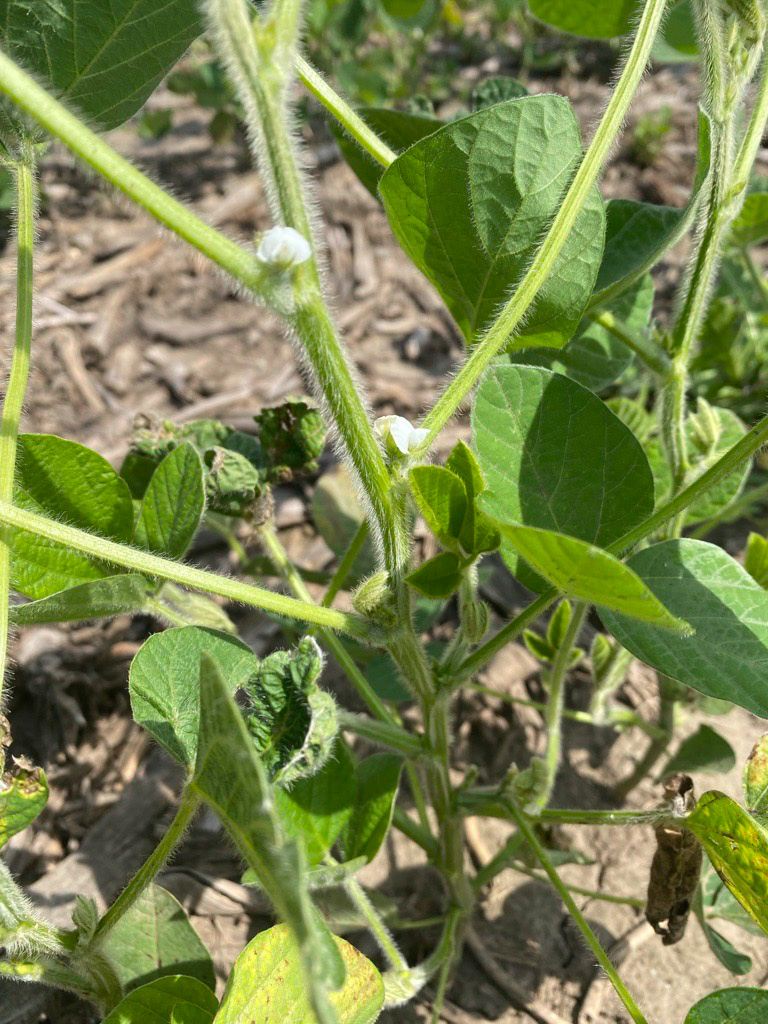
The Wisconsin soy food crop is currently in good overall condition, with early-season challenges from cool, dry weather during May largely offset by timely rainfall and warmer temperatures in recent weeks. While some fields planted during the second half of May continue to show uneven emergence, most soybeans have responded well to improved growing conditions and are progressing normally.
Recent precipitation has supported strong vegetative growth, with most soybean fields now in the V6 to R1 growth stages. Although thinner stands in isolated areas may reduce top-end yield potential, the overall outlook remains positive. The latest U.S. Drought Monitor indicates areas of slight drought across much of Wisconsin and northern Illinois, and declining soil moisture will require additional rainfall to sustain crop development through the reproductive stages. With multiple rain events forecast over the coming week, the crop remains well positioned to produce a solid yield if favorable weather continues.
Indiana
Planting progressed rapidly across central Indiana this spring as producers took advantage of favorable field conditions, allowing the majority of soybean and corn acres to be planted on or ahead of the normal schedule. Planting is now essentially complete, and growers have shifted their focus to crop development, weed management and monitoring fields affected by periods of excessive rainfall later in the planting season.
Frequent rainfall has provided adequate soil moisture throughout much of the region, although saturated soils have resulted in ponding and localized stand loss in some corn and soybean fields. Despite these isolated issues, most fields continue to exhibit strong yield potential. Weather conditions through the remainder of July will play an important role as corn enters pollination and soybeans continue vegetative growth.
Michigan
The Mid-Michigan soy food crop is 100% planted, with a limited amount of replanting completed following heavy rainfall during June. Despite a season marked by weather extremes, the crop has established well and is currently in good condition.
The growing season began with well-below-average rainfall during late May and early June, followed by record-setting rainfall in mid-June and a late-June heat wave that brought temperatures near 100°F (38°C). Weather conditions have since moderated, allowing crop development to stabilize. While growers have experienced an unusually variable start to the season, current field conditions remain encouraging, and producers are optimistic for a favorable remainder of the growing season.
North Dakota
The soy food crop across North Dakota and the Upper Midwest continues to develop at a pace consistent with the five-year average. Weed control activities are largely complete, and flowering is underway across much of the region. Producers continue to closely monitor fields for soybean aphids and disease, although reports of insect pressure have remained limited.
Recent weather has been warm with adequate rainfall across most production areas, providing sufficient soil moisture to support healthy crop development. While isolated locations that have missed recent rainfall are beginning to show signs of heat stress, overall crop conditions remain favorable. At this stage of the season, the regional soybean crop is tracking closely with historical averages and continues to demonstrate solid yield potential.
Scott Sinner, SB&B
ssinner@sb-b.com
Ohio
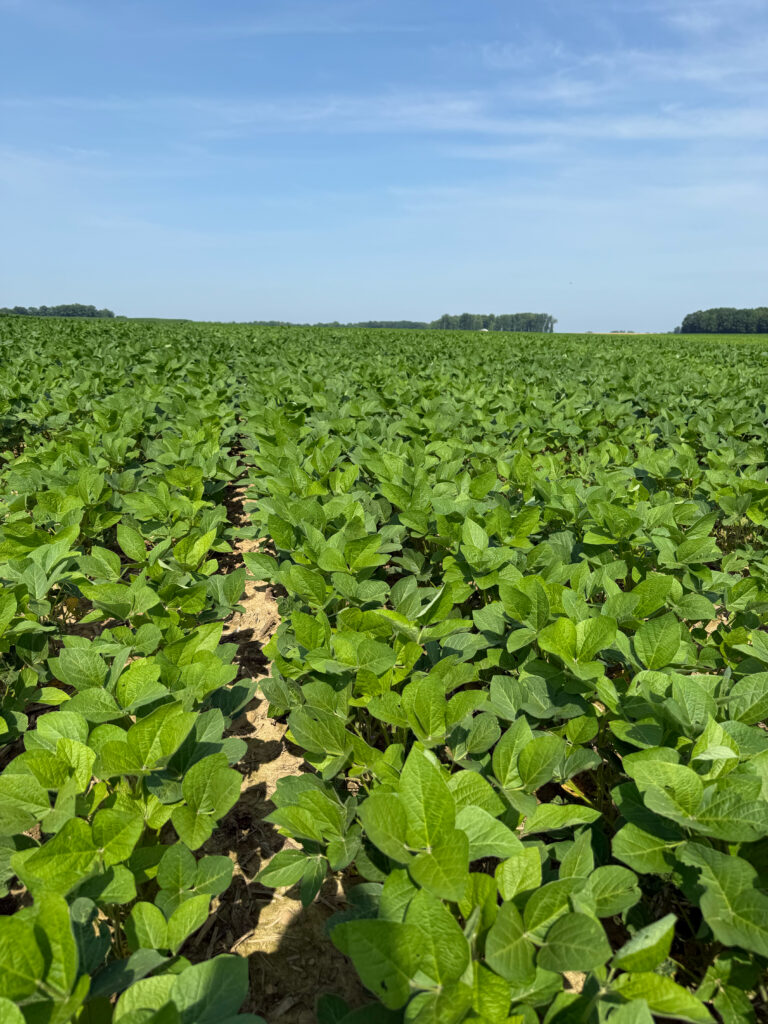
The soybean crop at Schwartz Farms continues to make steady progress following the completion of planting on June 8. The plants are well established and developing steadily, and overall field conditions look good at this stage of the growing season. According to the Ohio Country Journal’s latest Crop Progress Report, 25% of Ohio soybeans were blooming as of mid-July, slightly behind the five-year average of 33%.
Weather conditions have warmed since our June update, providing the heat soybeans needed for additional growth. We have also received timely rainfall that has helped maintain adequate soil moisture, although we will continue to monitor moisture levels closely as temperatures remain warm through July.
Overall, the outlook for Ohio’s 2026 soybean crop remains positive. As of July 12, the USDA rated 63% of Ohio’s soybean crop as good to excellent. At Schwartz Farms, no significant weed-control, pest, or disease concerns at this time. Provided the region continues to receive timely rainfall and adequate heat through the remainder of the growing season, the crop is well positioned for continued healthy development.
Gracie Schwartz, Schwartz Farms
Additional Information
Crop updates are submitted monthly on a voluntary basis by partners across U.S. soy food bean-growing regions and may not include every region in each report. For additional information, contact Will McNair, director of Soy Foods, Oil and Global Team Development, at wmcnair@ussec.org.
Late May to Mid June 2026 Soy Food Crop Report
Ohio
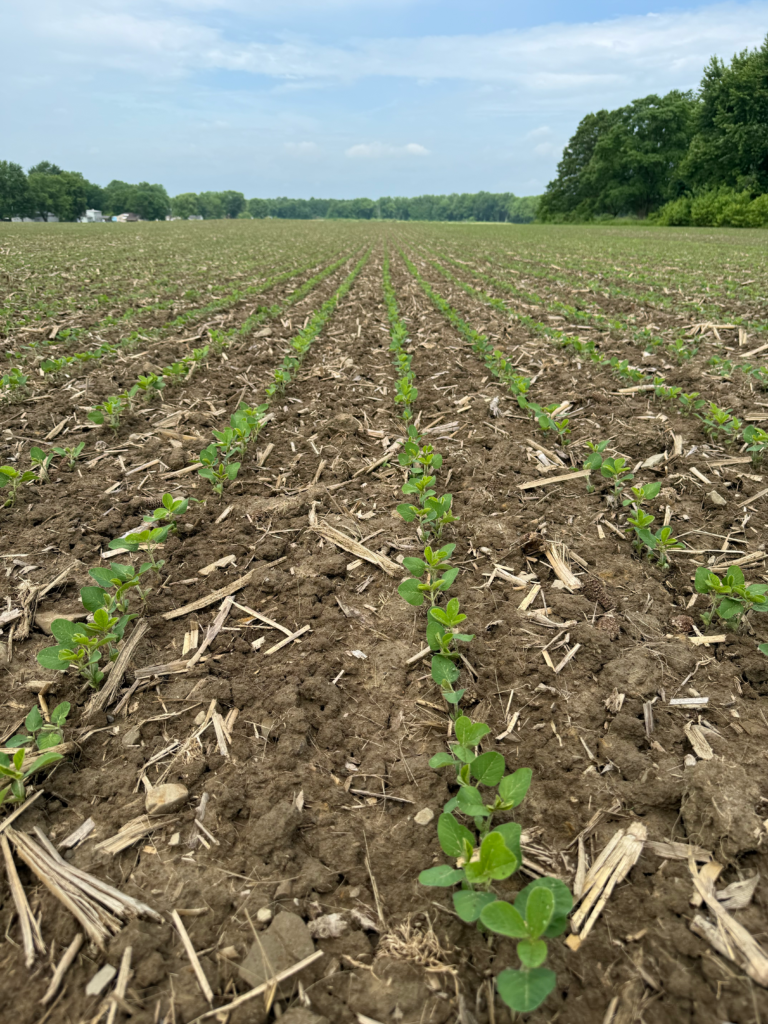
Planting progress at Schwartz Farms was slower than we hoped due to a cool, wet spring, but we were able to get back into the fields on May 30th and completed soybean planting yesterday, June 8th. Overall, we feel good about getting the crop planted into fit conditions after waiting for fields to dry out.
The weather was the biggest challenge in May, with measurable rain on 13 days throughout the month. This week, we are expecting a few days of light showers, with around 1 to 1.5 inches of rain forecasted near Schwartz Farms. We are hopeful this moisture will help the soybeans get started growing, but that the rain stays light enough that we do not have any replant concerns.
Overall, we are optimistic about the 2026 soybean crop. There is good moisture in the ground, and if we can get some heat and timely rain throughout the rest of the summer, soybeans should be in a good position.
Wisconsin
Planting is essentially complete across the Clinton area, with an estimated 98% to 100% of soybean acres planted. Favorable field conditions allowed growers to finish most remaining acres in late May. Soybeans are emerging well, with many fields reaching the VE (emergence) growth stage. Non-GMO soybean acres are showing strong, uniform emergence and good early-season vigor, resulting in solid stand establishment.
Recent warmer temperatures have supported crop development. Looking ahead, forecasts call for slightly above-average temperatures and opportunities for rainfall. Current soil moisture levels are adequate for continued emergence and early growth, although additional precipitation will be beneficial as the crop progresses into June.
Indiana
Planting progress across central Indiana advanced steadily through May as favorable weather conditions enabled farmers to make significant progress in both corn and soybean planting. While periodic rainfall caused localized delays in some areas, growers were able to return to the field quickly and resume planting.
Overall, soybean planting in central Indiana is approaching completion, with most acres now planted and positioned for early-season development.
Michigan
Planting progress in mid-Michigan has been slower than normal due to a cooler-than-average spring and frequent rainfall events. As of late May, approximately 50% of non-GMO soybean acres and 10% of organic soybean acres had been planted.
Drier weather is expected to support rapid planting progress, with non-GMO soybean planting anticipated to reach completion by the end of May. Organic soybean planting is expected to continue into the first half of June.
North Dakota
Planting throughout the Upper Midwest is nearing completion. Despite periods of rain and wind during the planting season, most soybean acres have been planted and have successfully emerged.
Early-season stand establishment appears strong, and crop conditions remain favorable. While weather challenges have occurred throughout the spring, the soybean crop has gotten off to a positive start across the region.
Minnesota
Planting is nearly complete across most of the Red River Valley region. A few isolated areas experienced delays due to late frost departure and untimely rainfall, leaving only limited acreage yet to be planted.
Recent warming temperatures and generally favorable rainfall have supported crop emergence and development. While some localized areas have received heavier rainfall, overall crop conditions remain positive, and the majority of the soybean crop is progressing well.
Additional Information
Crop updates are submitted monthly on a voluntary basis by partners across U.S. soy food bean-growing regions and may not include every region in each report. For additional information, contact Will McNair, director of Soy Foods, Oil and Global Team Development, at wmcnair@ussec.org.
April and Early May 2026 Soy Food Crop Report
Wisconsin
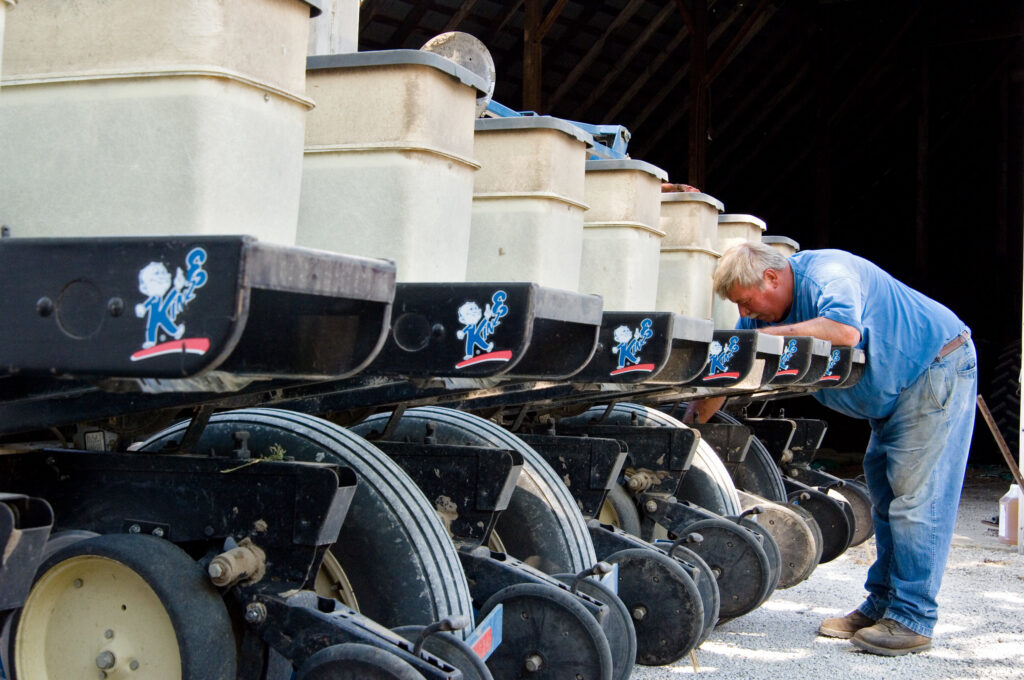
Soybean planting in southern Wisconsin may get rolling in a few areas later this week, pending improved weather conditions. However, recent rainfall totaling 5–7 inches over the past 10 days has left fields saturated and in some locations, it may take an additional three to four weeks before conditions are suitable for widespread planting.
Soil temperatures remain slightly below optimal levels. Growers are generally waiting for a 24-hour average soil temperature closer to 55°F, with a consistent five-day average in the mid-50s or higher, before beginning planting. Once warmer, drier conditions arrive and fields firm up, planting progress is expected to accelerate quickly.
Contact: Cameron Hilgenberg, The DeLong Company
cameron.hilgenberg@delongcompany.com
Indiana
Seed has been delivered and is staged in facilities across central Indiana, awaiting favorable planting conditions. While there have been a few short windows suitable for fieldwork, minimal planting has occurred to date.
As the region approaches the end of April, the next extended period of dry weather is expected to trigger a rapid start to the 2026 planting season.
Contact: Grant Fausset, Pence Ag
gfausset@penceag.com
Michigan
Fieldwork across mid-Michigan has been minimal, as the first half of April brought heavy spring rains. Combined with snowmelt, these conditions caused several local rivers to crest or exceed flood stage.
Until floodwaters recede and fields dry out, opportunities for early fieldwork will remain limited.
Contact: Chaise Wilson, Star of the West Milling Co. & Everbest Organics
chaise.wilson@starofthewest.com
Ohio
Soybean planting in northeast Ohio is expected to begin around April 27, weather permitting, and should progress quickly once field conditions improve. Recent temperatures ranged from the mid-60s to mid-70s before cooling on April 19, with warmer conditions expected to return later in the week.
Intermittent rainfall has helped replenish soil moisture, supporting favorable conditions for planting. Overall, the region is well-positioned for the start of the planting season if forecasted weather patterns hold.
Contact: Gracie Schwartz, Schwartz Farms
gschwartz@westfieldgrain.com
North Dakota
Cool and variable weather conditions in the Upper Midwest have delayed early planting activity. Soil moisture levels are currently adequate, and soil temperatures are beginning to rise.
Farmers are expected to begin planting other crops first, with soybean planting likely to follow in the coming weeks.
Contact: Scott Sinner, SB&B
ssinner@sb-b.com
Minnesota
Following a brief period of warm weather and a subsequent cold weekend, temperatures have returned to above-average levels, allowing planting to begin in parts of Minnesota. Activity has primarily focused on corn, though some soybean acres are also being planted.
The extended forecast remains favorable, with light showers expected early next week. Overall, conditions point to a typical spring planting season in the region.
Contact: Jake Noll, Richland IFC
jake@richlandifc.com
Virginia
Soybean planting in the Mid-Atlantic region is slightly behind schedule due to dry soil conditions. In the meantime, growers have focused on planting corn while awaiting improved moisture levels.
Forecasted rainfall later this week is expected to improve soil conditions and support a more active start to soybean planting during the week of April 27.
Contact: Tom Taliaferro, Montague Farms
tom@montaguefarms.com
Not funded by the Soy Checkoff