
Relationships Nourish the Demand for High-Quality U.S. Soy
Behind each international shipment of U.S. Soy is a network of relationships connecting those who grow U.S. soybeans with those who use them. The USSEC team, enmeshed in this global supply chain, sustains and builds these relationships that fuel U.S. Soy exports.
“Our team provides a unique blend of in-the-trenches support and big-picture strategic insight,” says Colby Pinkstone, executive director of international strategy for USSEC. “We adapt to provide support specific to each international market we serve.”
As a result, customers rely on U.S. Soy to nourish people, feed animals and aquaculture, and fuel sustainable growth. These snapshots demonstrate the power of relationships, reputation and quality to drive demand.

Nigeria: Fostering Growth Builds Demand
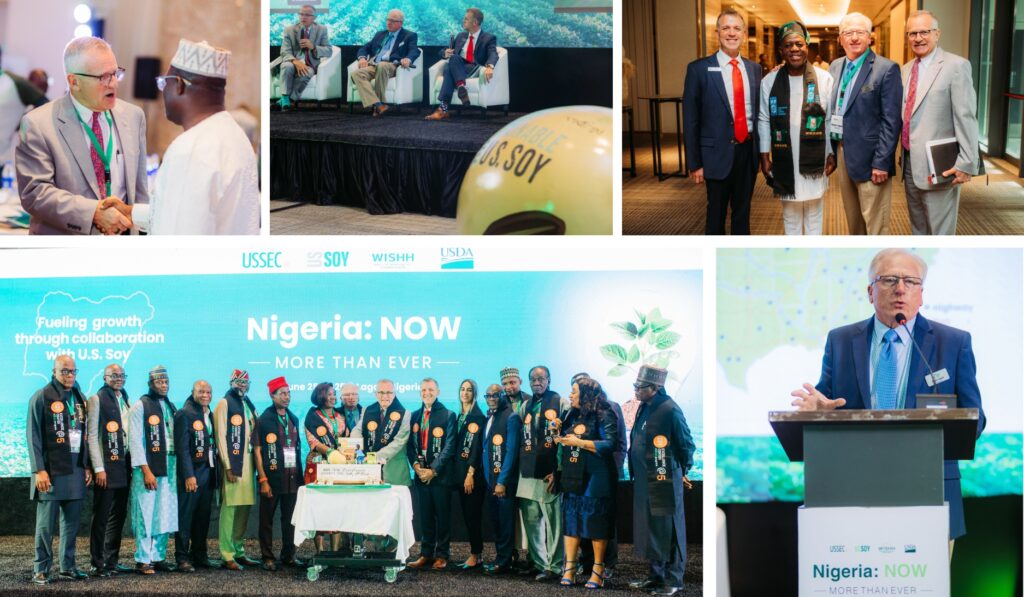
Nigeria is growing, with 50% of its population under the age of 19. However, food production has not kept pace. For several years, USSEC has been investing in industry relationships to help.
At the annual Nigeria: Now conference, USSEC gathers agribusiness leaders, experts and U.S. Soy representatives to discuss the importance of sustainable food systems to achieve food and nutrition security. It covers innovation technology used by U.S. Soy farmers to increase productivity.
At the same time, USSEC’s Soy Excellence Center in Nigeria has trained more than 2,000 early to mid-career professionals in areas like agronomy, aquaculture, feed milling and poultry production.
“These efforts have created strong connections between Nigerian government and businesses and U.S. Soy,” Pinkstone says. “Last year, when about one-third of the country’s domestic soybean crop was exported in favor of foreign currency earnings, Nigerian businesses naturally turned to U.S. Soy to fill the gap between local supply and demand.”
Türkiye: Quality Worth the Cost
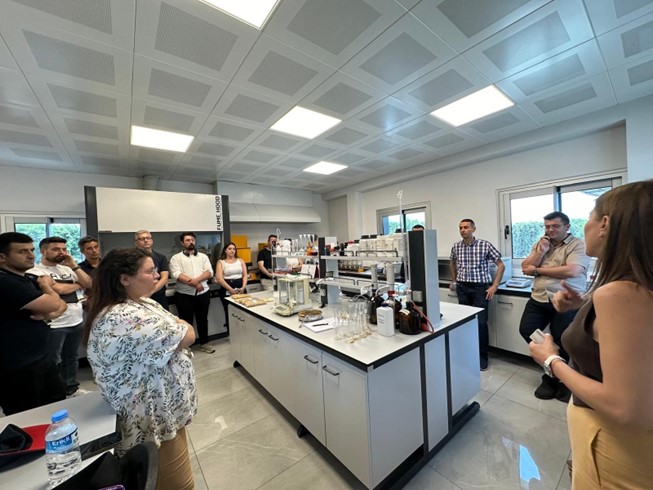
USSEC team members host various technical seminars in Türkiye, but they also visit one-on-one with customers. During one such visit with an aquaculture company, USSEC learned that soybean meal purchased from a major regional soybean crushers had low potassium hydroxide (KOH) solubility. KOH solubility is a test that helps determine the quality of soybean meal.
The aquaculture company had rejected two recent shipments of soybean meal from this crusher. The company justified the decision based on knowledge gained from USSEC quality seminars and the Quality Manual and Analysis for Soybean Products in the Feed Industry, published and translated into Turkish by USSEC.
“Our team intentionally engaged with representatives from the crusher at a USSEC risk management seminar a few weeks later,” Pinkstone says. “The import manager noted the crusher recently purchased a vessel of U.S. Soy, which was $25 to $30 more expensive than Brazilian soybeans, because of KOH issues with soy from other origins. Our relationships with every link in the supply chain help us understand how to meet specific needs and foster preference for U.S. Soy.”
Latin America: Connections Promote Use of Sustainable U.S. Soy
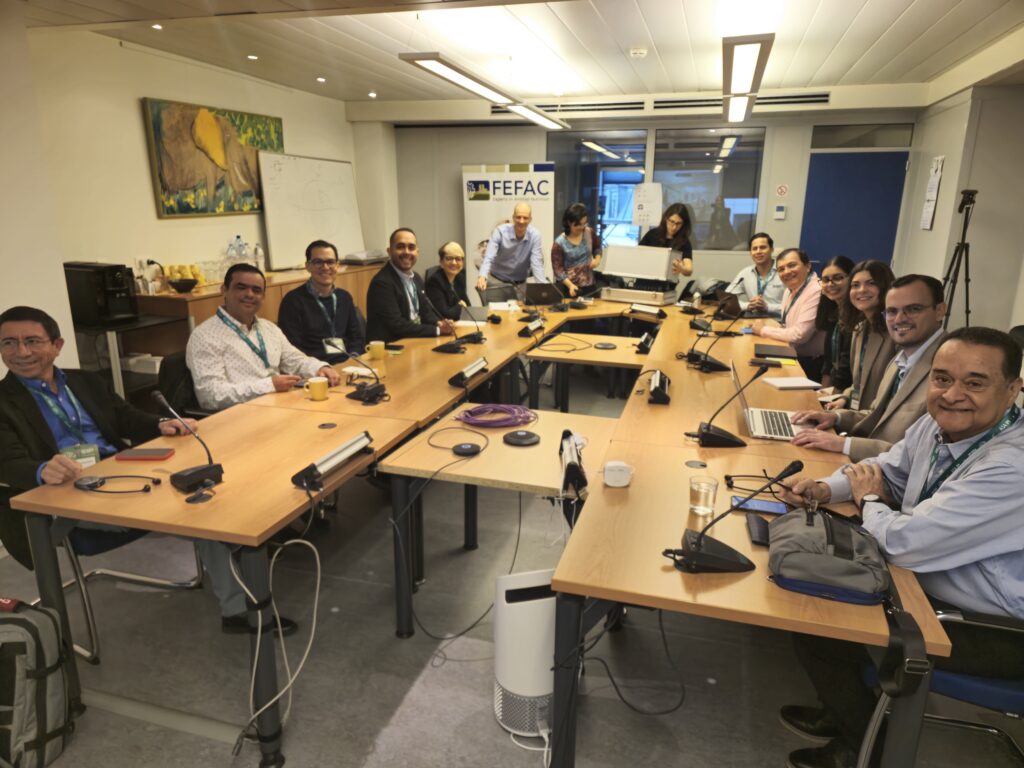
USSEC fosters global relationships based on shared values. USSEC took a trade team of Latin American customers interested in Sustainable U.S. Soy labels to Belgium and Spain to connect them with similar customers in another region with more experience with sustainability issues.
“The trip helped customers identify sustainability trends and opportunities that could translate into strategies to elevate the feed and food industries in the Americas,” Pinkstone explains. “Participants explored how Sustainable U.S. Soy addresses environmental, social, and economic challenges. Amidst inflation and international conflicts, USSEC is showcasing how U.S. Soy farmers excel in balancing environmental responsibility, agricultural productivity and business competitiveness from farm to table.”
Given this experience, USSEC Americas estimates that the number of companies using Sustainable U.S. Soy labels could grow nearly 40%. As part of using the label, companies commit to using U.S. Soy in their products, creating long-term demand and growth potential.
Southeast Asia: 20 Years of Collaboration for Trade
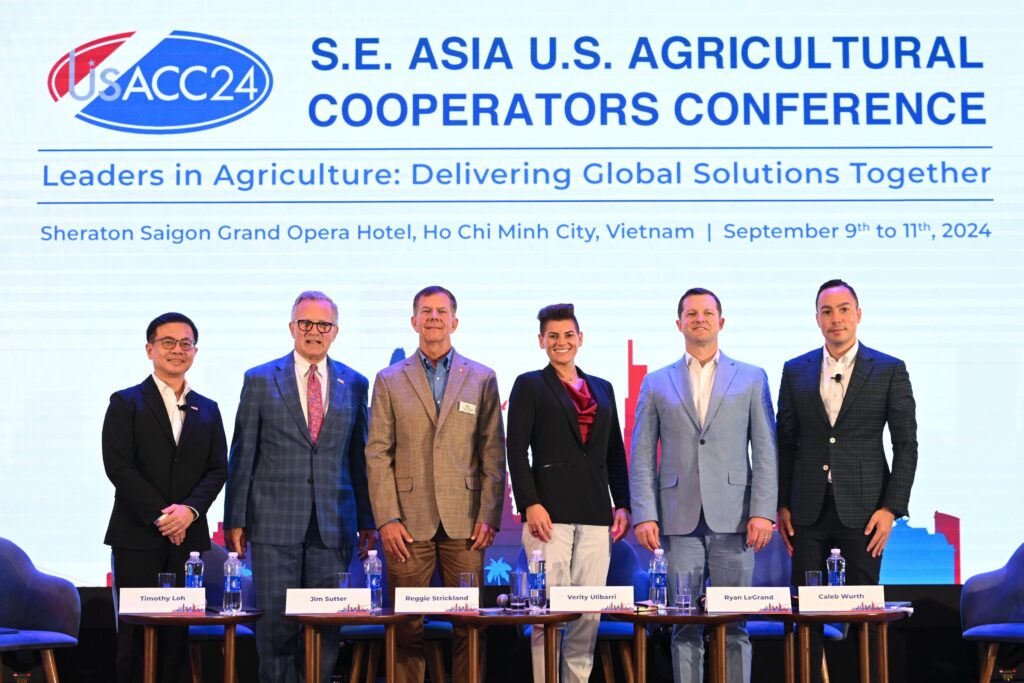
For 20 years, USSEC has collaborated with U.S. Grains & BioProducts Council and U.S. Wheat Associates to hold the Southeast Asia U.S. Agricultural Cooperators Conference. The most recent conference, held in Ho Chi Minh City, Vietnam, welcomed a record of more than 450 participants from over 20 countries to discuss global agriculture.
“This event has become a vital platform for fostering collaboration between U.S. agriculture and Southeast Asia,” says Pinkstone. “Attendees often purchase multiple U.S. commodities, and they value connecting with all their U.S. supplier in one place.”
The conference reinforces ongoing commitment to sustainable agricultural practices, trade innovation, partnerships and the collaborative spirit essential for addressing global food security challenges. The event showcases U.S. agricultural products and strengthens industry and government collaborations.
“We highlight the Pacific Northwest as a cost-effective route for U.S. grain and soybean exports,” she adds. “By demonstrating how U.S. farmers prioritize innovation, sustainability and trade, and building face-to-face relationships year after year, we foster preference commodities, including U.S. Soy.”
Pinkstone cites these examples as just a few of the ways USSEC connects people in ways that increase demand for sustainable, high-quality U.S. Soy.
For 20 years, USSEC has worked with other U.S. export organizations to host the Southeast Asia U.S. Agricultural Cooperators Conference, developing long-standing relationships that support exports to this region.
Partially funded by the Soy Checkoff
#####